 blog
blog
7 Ways to Improve Peptide Stability in Research
Table of Contents
- Why Peptide Stability Matters in Research
- 1. Master Temperature Control and Cold Chain Management
- 2. Implement Lyophilization for Long-Term Preservation
- 3. Apply Chemical Modifications to Enhance Metabolic Stability
- 4. Optimize Peptide Storage Best Practices
- 5. Control Environmental and Humidity Factors
- 6. Follow Peptide Reconstitution Protocols for Stability
- 7. Ensure Research-Grade Peptide Quality Control Standards
- Frequently Asked Questions
Last Updated: September 26, 2026
7 Ways to Improve Peptide Stability in Research
Peptide degradation is one of the biggest challenges researchers face in the laboratory. A single batch of unstable peptides can compromise months of experimental work, waste resources, and delay critical findings. At BlueWaveCompound, we understand how frustrating this is, which is why we focus on providing high-purity compounds that ensure consistent, reliable experimental results.
The good news: peptide stability isn't random. It's controllable. By mastering a few key techniques, you can dramatically extend shelf life, improve experimental reproducibility, and reduce the noise that clouds your data.
Below, we'll walk you through seven proven methods to protect your peptides and keep your research on track. These strategies address the main culprits behind degradation: temperature swings, moisture, chemical breakdown, and poor handling. Implement even a few of them, and you'll see measurable improvements in your results.
Why Peptide Stability Matters in Research
Peptide degradation happens silently. Your samples look fine. But at the molecular level, amino acid chains are breaking down through hydrolysis, oxidation, and proteolytic attack. By the time you run your assay, the peptide concentration has dropped, and your results reflect that loss, not the true effect of your treatment.
Unstable peptides create noise in your data. This noise forces you to run more replicates, use more material, and spend more time troubleshooting. It also erodes confidence in your findings. When you submit a paper or grant application, reviewers want to know your materials were consistent and reliable. Degraded peptides undermine that credibility.
The cost of instability compounds over time. A batch that loses 10% potency per month means your experiments three months from now will run on compromised material. For long-term studies or collaborative projects where samples ship between labs, this degradation becomes a real threat to data integrity.
Research-grade peptide quality control starts with stability. BlueWaveCompound delivers peptides tested for purity and stability, with certificates of analysis that document exactly what you're working with. But even premium peptides need proper handling to stay intact.
1. Master Temperature Control and Cold Chain Management
Temperature is the single biggest driver of peptide degradation. Heat accelerates hydrolysis and oxidation. Freezing and thawing cycles create ice crystals that damage molecular structure. Room-temperature storage is a fast track to loss of potency.
The solution is consistent, controlled cold storage. Most research-grade peptides should be stored at -20°C or colder. Some sensitive peptides need -80°C freezers. The key is stability: pick a temperature and keep it there. Avoid the temptation to move samples between freezers or take them out repeatedly.
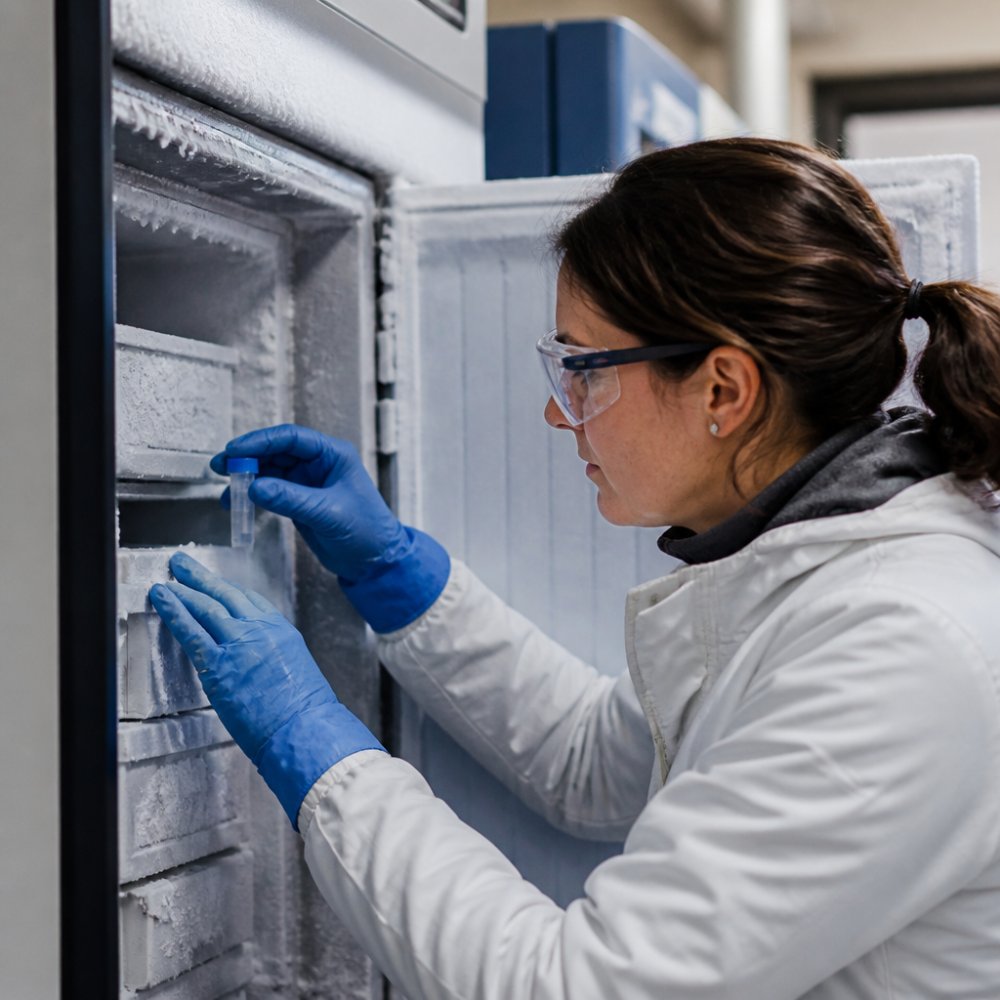
Cold chain management becomes critical when peptides ship between labs. A broken cold chain, even for a few hours during transit, can degrade samples faster than weeks of storage at the correct temperature. Use insulated shipping containers with ice packs or dry ice. Track temperature during shipping with data loggers when possible.
Pro tips for temperature control:
- Label all freezers with the target temperature and check it weekly
- Use a dedicated peptide freezer if your lab runs high volume
- Never store peptides in frost-free freezers (the defrost cycles create temperature swings)
- Keep a backup power source for critical freezers
- Document temperature readings in your lab notebook
When you receive peptides from a supplier like BlueWaveCompound, they arrive with documentation of storage conditions during shipping. This tells you whether the cold chain held.
2. Implement Lyophilization for Long-Term Preservation
Lyophilization, freeze-drying, is the gold standard for peptide storage. It removes water, which eliminates hydrolysis as a degradation pathway. Lyophilized peptides are stable for years, sometimes decades, when stored in the right conditions.
The process works like this: peptides are frozen, then placed in a vacuum chamber. Ice sublimes away without passing through a liquid phase. What remains is a dry powder that resists degradation far better than dissolved peptide.
Lyophilized peptides need reconstitution before use. You add buffer or solvent to rehydrate them. This takes a few minutes but gives you a fresh, active solution ready for your assay. The trade-off is worth it: you get long shelf life and batch consistency.
Not all peptides lyophilize well. Some form aggregates during freeze-drying. Others are sensitive to the vacuum process. Your supplier should tell you whether a peptide is suitable for lyophilization. BlueWaveCompound provides premium, research-grade peptides. Your supplier should tell you whether a peptide is suitable for lyophilization.
When to choose lyophilized peptides:
- You need storage beyond 6 months
- You run experiments sporadically (not continuous)
- You want to minimize batch-to-batch variability
- You ship peptides between multiple labs
Lyophilized peptides also travel better. Dry powder is less sensitive to temperature fluctuations than liquid solutions. This makes them ideal for collaborative research or multi-site studies.
3. Apply Chemical Modifications to Enhance Metabolic Stability
Some peptides degrade because your cells or enzymes attack them. Proteolytic enzymes cut peptide bonds. This is metabolic degradation, and it's separate from chemical degradation (oxidation, hydrolysis).
You can slow metabolic degradation by modifying the peptide backbone. Common modifications include:
- N-methylation: Adding a methyl group to the backbone nitrogen. This blocks protease recognition and improves membrane permeability.
- Acetylation: Capping the N-terminus with an acetyl group. This protects the peptide from exopeptidases.
- Backbone cyclization: Linking the C-terminus back to the N-terminus. Cyclic peptides resist proteolytic cleavage better than linear ones.
- D-amino acids: Substituting L-amino acids with D-forms at key positions. Proteases evolved to attack L-amino acids, so D-amino acids slow degradation.
These modifications change the peptide's properties. They may affect binding affinity, cell permeability, or immunogenicity. You need to test whether the modified peptide still does what you need it to do.
Chemical modifications also increase synthesis cost and complexity. They're worth it when metabolic stability is the limiting factor in your experiments. If your peptide degrades in cells or serum before it reaches its target, modification is your answer.
4. Optimize Peptide Storage Best Practices
Storage best practices go beyond temperature. They include the container, the atmosphere, and the handling protocol.
Container choice matters. Glass vials with inert caps are best. Plastic can leach chemicals or absorb peptides. Metal caps can corrode. Use amber or opaque vials if your peptide is light-sensitive.
Minimize headspace. Air in the vial contains oxygen, which drives oxidation. Some labs use nitrogen or argon to displace air. This is especially important for long-term storage.
Keep detailed records. Document when you open a vial, how much you use, and when you reseal it. Track the number of freeze-thaw cycles. This data helps you spot degradation patterns and predict shelf life.
Use aliquots. Don't repeatedly open and close a large vial. Divide it into smaller aliquots. Use one at a time. This limits exposure to air and temperature swings.
Store away from light. UV light degrades many peptides. Keep vials in the dark or use opaque containers. If your freezer has lights, cover them.
Peptide storage best practices are especially important if you're running long-term studies. A peptide that's stable for three months at -20°C might degrade significantly over a year.
5. Control Environmental and Humidity Factors
Moisture is the enemy of peptide stability. Water drives hydrolysis. Even in a freezer, if frost accumulates on your vial, you're exposing your peptide to liquid water.
Environmental controls to implement:
- Keep freezers in a dedicated, climate-controlled room
- Monitor humidity with a hygrometer (aim for 30-50% relative humidity)
- Use desiccant packs in storage containers
- Defrost freezers regularly to prevent ice accumulation
- Avoid opening freezers unnecessarily
6. Follow Peptide Reconstitution Protocols for Stability
Reconstitution is where many researchers lose peptide stability without realizing it. You thaw a vial, add buffer, and assume the peptide is ready to use. But the reconstitution process itself can degrade peptides if done carelessly.
Reconstitution checklist:
- Use the solvent recommended by your supplier
- Add solvent slowly to lyophilized peptide
- Mix gently, don't vortex
- Use fresh, sterile buffer
- Reconstitute only what you need for the experiment
- Use reconstituted peptide within the recommended timeframe
7. Ensure Research-Grade Peptide Quality Control Standards
Quality control starts with your supplier. A research-grade peptide should come with a certificate of analysis (COA) that documents purity, identity, and sometimes stability data. This tells you what you're actually receiving.
Check the COA before you use a peptide. Look for:
- Purity percentage (typically ≥99% for research-grade)
- Molecular weight confirmation
- Identity verification (usually by mass spectrometry or HPLC)
- Testing date (recent is better)
- Recommended storage conditions
Frequently Asked Questions
What are the primary factors that cause peptide degradation in research?
Peptide degradation occurs through multiple pathways: hydrolysis triggered by pH extremes, oxidation from oxygen exposure, thermal breakdown at elevated temperatures, and proteolytic enzyme attack. Freeze-thaw cycles also compromise structural integrity. Ambient moisture accelerates degradation by promoting hydrolysis. Controlling temperature, pH, oxygen exposure, and humidity directly addresses these mechanisms. Third-party lab testing validates peptide stability before and after storage, ensuring your research materials maintain their intended purity and performance throughout your experiments.
How should research-grade peptides be stored to maintain stability?
Research-grade peptides require storage at -20°C to -80°C in desiccant-sealed containers to prevent moisture absorption. Lyophilized (freeze-dried) peptides are more stable than liquid formulations. Store in amber or opaque vials to minimize light exposure. Maintain consistent temperatures and avoid repeated freeze-thaw cycles, which degrade amino acid chains. When reconstituting, use sterile, pH-buffered solutions and store reconstituted peptides at 2-8°C for short-term use or -20°C for longer periods. Certificates of Analysis document initial purity and provide baseline data for comparing post-storage stability.
Does lyophilization improve the long-term stability of peptides in research?
Yes. Lyophilization removes water, which is the primary driver of hydrolysis and oxidation. Freeze-dried peptides exhibit significantly extended shelf life compared to liquid solutions. The process involves controlled freezing and vacuum sublimation, preserving the backbone structure and covalent bonds. Lyophilized peptides stored in desiccant containers at -20°C or colder can remain stable for years. This method is essential for maintaining peptide stability during shipping and long-term archival storage in research laboratories.
What role does a Certificate of Analysis play in verifying peptide quality and stability?
A Certificate of Analysis (COA) provides third-party lab-verified data on peptide purity, identity, and initial structural integrity at the time of manufacture. It documents HPLC analysis, mass spectrometry results, and moisture content, critical baseline metrics for assessing degradation over time. By comparing your stored peptide's performance against the COA specifications, you can detect whether storage conditions have compromised sample integrity. This documentation is essential for regulatory compliance, reproducibility in research, and troubleshooting unexpected experimental results. BlueWaveCompound provides COAs with every batch to support your quality control protocols.