 ultimate-guide
Are Research Peptides Worth the Cost? A Lab Guide
Table of Contents
- What Makes Research Peptides Cost More Than Generic Compounds
- Third-Party Lab Testing for Peptides: What You're Actually Paying For
- How to Read a Certificate of Analysis and Verify Purity Claims
- Peptide Batch-to-Batch Reproducibility: Why Consistency Drives ROI
- Cost-Per-Protocol Analysis: Calculating True Experimental Value
- Storage, Stability, and Degradation Factors That Protect Your Investment
- Risks of Budget Peptides and Hidden Costs of Experimental Failure
- Conclusion
- Frequently Asked Questions
Last Updated: September 3, 2026
What Makes Research Peptides Cost More Than Generic Compounds
Research peptides command premium pricing for reasons that extend far beyond marketing. The cost difference reflects fundamental distinctions in manufacturing, testing, and documentation that directly impact experimental outcomes.
When you purchase research-grade peptides, you're paying for reproducibility. Generic compounds introduce experimental variability that costs far more in failed experiments, wasted researcher time, and inconclusive results. A peptide that degrades mid-protocol or contains impurities forces you to restart your work, a hidden cost that compounds quickly.
The manufacturing process differs significantly. Research-grade peptides undergo stricter synthesis protocols, employ higher-purity solvents, and require controlled environmental conditions throughout production. The equipment, facility standards, and quality control checkpoints built into premium peptide production simply don't exist in budget alternatives.
Premium providers invest in stability optimization through specialized storage formulations, protective packaging, and shipping protocols designed to preserve peptide integrity. Peptide degradation doesn't announce itself; a vial can appear unchanged while potency erodes silently, invalidating your entire experiment weeks later.
Documentation represents another cost driver. Research-grade peptides come with comprehensive Certificates of Analysis, detailed batch records, and traceability documentation. This paperwork is evidence. When your PI questions a result, you can point to verified purity data, concentration confirmation, and stability testing from independent third-party labs. Budget peptides rarely offer this transparency.
Blue Wave Compounds structures its pricing around these realities. Every batch includes third-party lab testing and a Certificate of Analysis because researchers deserve to know exactly what they're working with. Visit https://bluewavecompounds.com to explore research-grade options that support your experimental success.
Third-Party Lab Testing for Peptides: What You're Actually Paying For
Third-party lab testing is the foundation of experimental integrity. When an independent laboratory tests your peptides, they're measuring what's actually in the vial, not what the manufacturer claims.
Testing typically covers purity (measured by HPLC or mass spectrometry), concentration accuracy, identity confirmation, and sterility screening (peer-reviewed research). Premium providers absorb testing costs because they've built it into their business model.
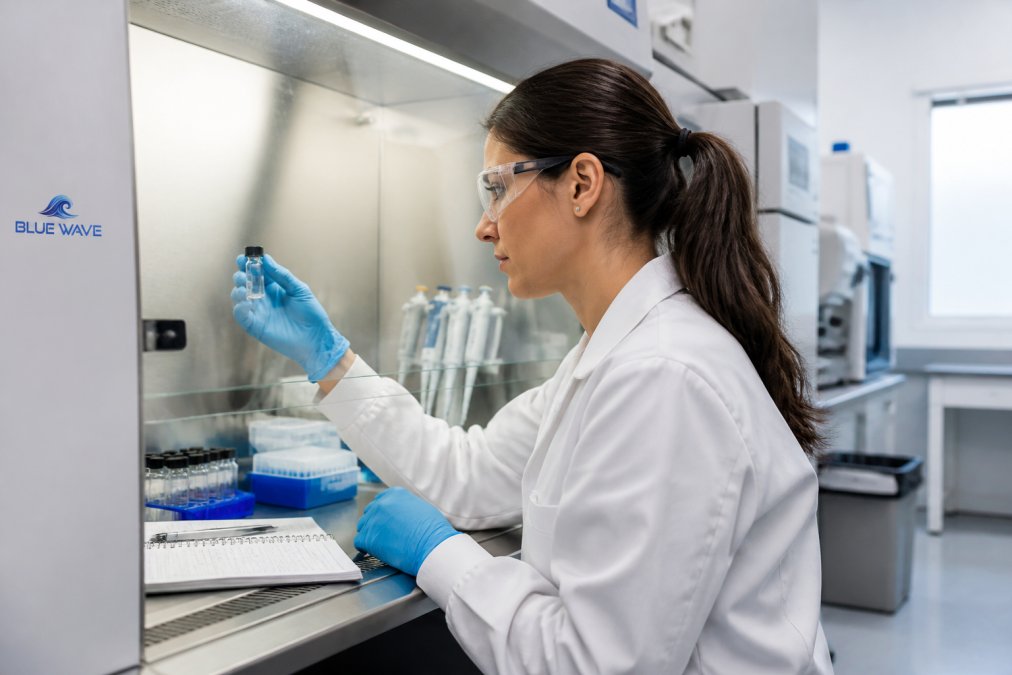
Third-party testing creates accountability. If a batch fails testing, the lab documents it. If a provider ships substandard material, the Certificate of Analysis becomes evidence. This is why research institutions demand it as a requirement for reproducible science.
Many labs conduct in-house testing only, which has inherent conflicts of interest: the manufacturer tests their own product. Independent testing removes that conflict. When you receive a Certificate of Analysis from an accredited third-party lab, you're holding objective evidence, not a sales document.
Institutions increasingly require third-party verification before approving vendors. If your procurement process demands independent testing documentation, budget providers often can't comply. This requirement alone justifies premium pricing because it's non-negotiable for institutional research.
According to FDA guidance on pharmaceutical testing and verification, independent verification of pharmaceutical compounds protects research integrity and ensures reproducibility across experimental settings.
How to Read a Certificate of Analysis and Verify Purity Claims
A Certificate of Analysis is a technical document written to be readable. Learning to interpret it separates informed purchasing decisions from blind trust.
The first section identifies the batch: lot number, date of analysis, and the testing lab's credentials. Verify the lab is accredited, as accreditation means the lab meets established standards for equipment calibration, methodology, and documentation.
Purity data appears next, usually expressed as a percentage. A peptide listed as 99% pure means 99% of the molecular content is the target peptide; the remaining 1% includes water, salts, or synthesis byproducts. Higher purity isn't always necessary, it depends on your application. A cell culture experiment might tolerate 95% purity, while a structural biology study requiring precise protein interactions might demand 99.5%.
The testing method matters as much as the result. HPLC (High-Performance Liquid Chromatography) is standard for purity assessment. Mass spectrometry confirms molecular weight and identity. Comprehensive analysis typically uses multiple techniques to cross-verify results.
Concentration confirmation tells you the actual peptide content matches the labeled amount. Water content (moisture analysis) indicates how much of the vial's weight is water versus active peptide. Sterility testing confirms the peptide is free from bacterial and fungal contamination, which matters for any research involving living cells or organisms.
Red flags on a Certificate include vague testing descriptions, missing accreditation information, or undated analyses. If a provider can't produce a clear Certificate of Analysis, the peptide itself is questionable.
Peptide Batch-to-Batch Reproducibility: Why Consistency Drives ROI
Batch-to-batch reproducibility is where premium peptides justify their cost most convincingly. When you order the same peptide twice, you expect identical results. In practice, this consistency is harder to achieve than it sounds.
Manufacturing inherently introduces variation. Raw materials vary slightly. Environmental conditions shift. Equipment calibration drifts. Research-grade providers control variation through standardized protocols and rigorous quality gates. Every batch undergoes the same synthesis procedure, the same purification steps, and the same testing. If a batch fails to meet specifications, it doesn't ship, it's reworked or discarded. Budget providers skip this step because rejection cuts into margins.
Batch-to-batch consistency directly impacts your experimental reproducibility. If Batch A delivers strong results but Batch B has lower purity or different impurity profiles, your results diverge. You can't tell if the difference reflects your experimental technique or the peptide variation. This ambiguity invalidates your work.
Premium providers document batch consistency over time, showing historical data that proves their process controls work. Budget providers rarely track this data, let alone share it.
The ROI calculation is straightforward: one failed experiment costs weeks of work and thousands in materials. A premium peptide that prevents that failure pays for itself immediately. Batch-to-batch consistency is the insurance policy that makes premium pricing rational.
Cost-Per-Protocol Analysis: Calculating True Experimental Value
Understanding true cost requires looking beyond per-milligram pricing. A cheaper peptide that fails mid-protocol costs far more than an expensive one that works perfectly.
Start by calculating your actual peptide consumption per protocol. If your experiment uses 5 milligrams of peptide and you run the protocol 20 times per year, you need 100 milligrams annually. The per-milligram difference looks significant until you factor in success rates.
If the premium peptide succeeds 95% of the time and the budget peptide succeeds 75% of the time, the math changes. Twenty protocols with the premium peptide yield 19 successful experiments. Twenty with the budget peptide yield 15. Those four failed experiments cost you in wasted time, materials, and delayed results.
Each failed protocol represents sunk costs: researcher hours, cell culture media, reagents, and equipment time. A failed experiment might cost in direct materials and researcher time. Failures equal substantial hidden costs that far exceed the initial peptide savings.
Stability factors into this too. A peptide that degrades during storage forces you to reorder more frequently. You're not just paying for the peptide; you're paying for waste when batches expire unused. Premium peptides engineered for stability reduce this waste.
Documentation costs matter as well. If your institution requires Certificates of Analysis for regulatory or publication purposes, budget peptides that lack them force you to source alternative materials or delay publication.
Storage, Stability, and Degradation Factors That Protect Your Investment
Peptide degradation is invisible until it's catastrophic. A vial can sit on your shelf looking perfect while potency erodes. Understanding degradation mechanisms helps you protect your investment.
Peptides degrade through oxidation (exposure to oxygen), hydrolysis (reaction with water), photodegradation (light exposure), and microbial contamination. Each mechanism requires different protection strategies.
Lyophilization (freeze-drying) is the standard preservation method (peer-reviewed research). It removes water, which slows hydrolysis dramatically. A lyophilized peptide stored properly can remain stable for years. Poorly lyophilized peptides degrade in months.
Temperature control is critical. Most peptides prefer frozen storage (-20°C or colder). Room temperature storage accelerates degradation. The provider's storage recommendations should match your capabilities.
Packaging protects against light and oxygen. Amber vials reduce light exposure. Inert gas purging removes oxygen. Desiccant packets absorb residual moisture. Budget providers often skip these steps, shipping peptides in basic containers with minimal protection.
Reconstitution introduces new degradation risks. When you dissolve a lyophilized peptide, you're reintroducing water. Premium providers include reconstitution protocols and stability data for reconstituted solutions, telling you how long a dissolved peptide remains stable.
Shipping conditions matter enormously. A peptide shipped at room temperature during summer might arrive partially degraded. Premium providers use insulated packaging, ice packs, and temperature-monitoring devices. Budget providers often ship standard mail, exposing peptides to temperature extremes.
Risks of Budget Peptides and Hidden Costs of Experimental Failure
Choosing budget peptides introduces risks that extend beyond simple quality concerns. Understanding these risks helps you make informed purchasing decisions.
Purity uncertainty is the first risk. Without third-party testing, you don't know what you're injecting into your experiment. Impurities can interact with your biological system in unpredictable ways, making results uninterpretable.
Batch variability introduces another layer of risk. Budget providers often lack rigorous quality controls. One batch might be 92% pure, the next 87%. This variation makes it impossible to develop reliable protocols.
Regulatory and publication risk is significant. Journals and agencies increasingly demand documentation of peptide purity and source. A budget peptide lacking a Certificate of Analysis creates a publication barrier.
Institutional approval risk affects researchers at universities and hospitals. Many institutions require vendors to meet specific quality standards. Budget providers often don't meet these requirements, forcing you to restart with an approved vendor.
Degradation risk is insidious because it's invisible. A budget peptide might arrive partially degraded without obvious signs. Your experiment fails, but you blame your protocol. Only later do you discover the peptide was the problem, wasting months.
Contamination risk includes microbial and chemical contamination. Budget peptides might contain bacterial endotoxins or synthesis solvents that interfere with assays. These problems manifest as anomalous results that are nearly impossible to troubleshoot.
The cumulative cost of these risks is substantial. One failed experiment might cost thousands in direct expenses. A publication delay costs months of career advancement. A contamination event that ruins a cell line costs thousands and weeks to recover from.
Conclusion
Research peptides worth their cost when you calculate true experimental value rather than focusing on per-milligram pricing. Premium peptides deliver reproducibility, documentation, and stability that budget alternatives simply can't match. The investment in third-party testing, batch consistency, and proper storage protects your research integrity and accelerates your path to results.
If your institution requires vendor approval, Certificates of Analysis, or documented quality standards, premium peptides become mandatory, not optional. Blue Wave Compounds meets these requirements with third-party lab-tested compounds and comprehensive Certificates of Analysis for every batch. Visit https://bluewavecompounds.com to explore research-grade options that support your experimental success.
Frequently Asked Questions
Q: How do I verify that a research peptide supplier's purity claims are real and not just marketing?
A: Request the Certificate of Analysis (COA) from a third-party lab before committing to an order. A legitimate COA shows the testing methodology, the exact purity percentage achieved, the date of analysis, and the lab's credentials. Cross-reference the testing standard used (HPLC, mass spectrometry, or both). Reputable suppliers like BlueWaveCompound provide COAs with every batch and openly document their third-party testing process. If a vendor cannot produce independent lab results, that's a red flag.
Q: What factors determine the price of high-purity research peptides?
A: Price depends on purity level (99% vs. 95%), synthesis complexity, batch size, peptide sequence length, storage requirements, and third-party testing costs. Premium research-grade peptides command higher prices because they undergo rigorous quality control, stability testing, and documentation. Batch-to-batch reproducibility also adds cost, suppliers must invest in consistent manufacturing processes. For current pricing and quotes tailored to your lab's needs, visit https://bluewavecompounds.com or contact the supplier directly.
Q: Why is batch-to-batch reproducibility critical in biochemical research?
A: Inconsistent batches introduce experimental noise that wastes time and resources. If one batch has 99% purity and the next has 97%, your results become unreliable and difficult to replicate. This forces you to repeat experiments, delays publications, and undermines confidence in your data. Research-grade peptides are manufactured with strict controls to ensure each batch meets the same specifications. This consistency reduces failed experiments and accelerates your research timeline, justifying the premium cost.
Q: What are the real risks of using low-cost, unverified research compounds?
A: Budget peptides often lack third-party verification, stable storage formulation, or documented purity. Common consequences include failed experiments, contaminated batches, degradation during shipping, and inability to troubleshoot results because you cannot verify what you actually used. Academic institutions and government-funded labs increasingly require vendors to provide COAs and regulatory compliance documentation. Using unverified compounds can jeopardize grant funding, peer review acceptance, and institutional approval. The cost of a failed study far exceeds the savings from cheaper peptides.
This article was written using GrandRanker