 listicle
Buy Research Grade Peptides Online: 2026 Guide
Table of Contents
- What Makes Research Grade Peptides Worth Sourcing Online
- Peptide Certificate of Analysis Requirements Every Lab Should Know
- How to Verify Peptide Purity Before You Commit to a Supplier
- Research Peptide Storage Guidelines That Protect Your Investment
- Regulatory Compliance and Procurement Documentation for Research Labs
- Top Sources to Buy Research Grade Peptides Online in 2026
- BlueWaveCompounds:com High-Purity Peptides with Batch-Specific COAs
- Phoenix Pharmaceuticals: ISO 9001 Certified Custom Synthesis
- rPeptide: Specialized Recombinant Peptides for Neurodegenerative Research
- Limitless Life Nootropics: Broad Catalog with Multi-Method Testing
- PureRawz: Large Selection with Accessible Batch COAs
- Ensuring Batch-to-Batch Reproducibility for Parallel Experiments
- Conclusion
Last Updated: August 17, 2026
What Makes Research Grade Peptides Worth Sourcing Online
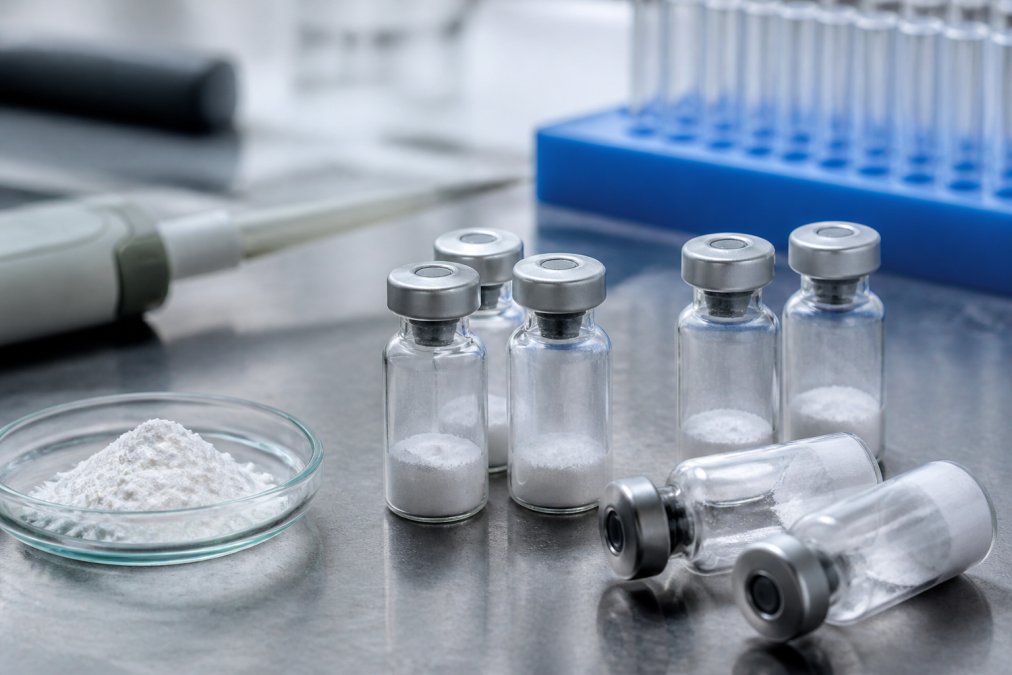
Research grade peptides are amino acid sequences synthesized to defined purity specifications for use in controlled laboratory experiments, drug development, and biochemical assays. The "research grade" designation signals documented purity, batch-specific analytical testing, and traceability, none guaranteed by lower-tier suppliers.
Online sourcing offers broader catalog access, faster custom synthesis turnaround, and transparent certificate of analysis documentation before purchase. The real risk isn't the online channel itself, but choosing a supplier whose testing claims can't be independently verified.
Below, we cover what a valid COA must contain, how to interpret HPLC and mass spectrometry data, proper storage protocols, regulatory requirements, and the best sources to buy research grade peptides online in 2026.
Quick Picks:
- Best Overall: BlueWaveCompounds, batch-specific COAs, ≥99% purity, money-back guarantee
- Best for Custom Synthesis: Phoenix Pharmaceuticals, ISO 9001 certified, 9,000+ SKUs
- Best for Neurodegenerative Research: rPeptide, specialized recombinant peptides for Alzheimer's studies
- Best Broad Catalog: Limitless Life Nootropics, multi-method testing across cognitive and metabolic categories
- Best for COA Accessibility: PureRawz, batch COAs on every product page
Peptide Certificate of Analysis Requirements Every Lab Should Know
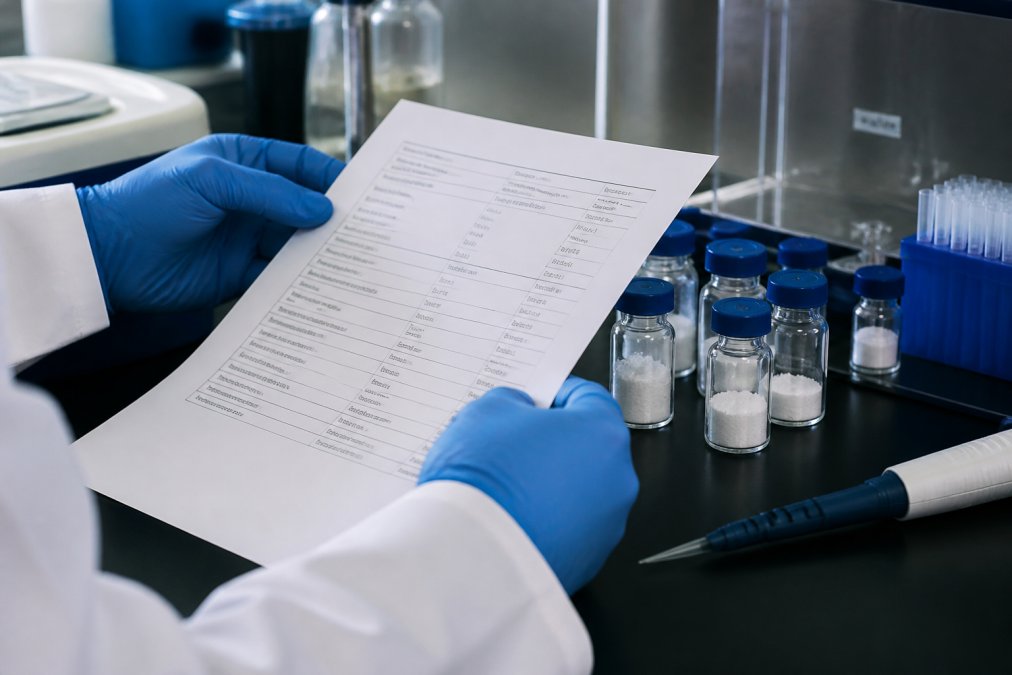
A Certificate of Analysis is the single most important document in research peptide procurement. A valid COA confirms that the compound you receive matches the peptide sequence you ordered, at the stated purity, from a specific manufactured batch.
According to FDA guidance on analytical testing documentation for research compounds, traceability and batch-level documentation are foundational requirements for maintaining scientific integrity in research settings.
What a Valid COA Must Include
A complete COA for research grade peptides should contain:
- Peptide sequence and molecular weight, confirms identity against the ordered specification
- Purity percentage, typically expressed as area-under-curve from HPLC analysis
- Analytical method used, HPLC, mass spectrometry, or both
- Batch or lot number, ties the document to a specific manufactured run
- Date of analysis, verifies the data isn't recycled from a prior batch
- Third-party laboratory name, confirms the testing wasn't conducted in-house by the supplier
Any COA missing the batch number or the testing laboratory's identity should be treated as insufficient documentation for institutional procurement.
Batch-Specific vs. Generic COAs: Why the Difference Matters
A generic COA is produced once and applied to every shipment indefinitely. A batch-specific COA is generated for each manufactured lot and reflects actual analytical results from that production run. Peptide synthesis conditions vary between runs, so a generic COA tells you what one batch tested as, not what you're actually receiving.
How to Verify Peptide Purity Before You Commit to a Supplier
Purity verification confirms that the amino acid sequence is biologically active, free of significant byproducts, and consistent with your experimental protocols.
HPLC Analysis and Mass Spectrometry: The Two Standards That Count
HPLC analysis measures purity by separating the peptide from impurities and quantifying relative peak areas. A result of "≥99% purity by HPLC" means the target compound accounts for at least 99% of the detected area under the chromatographic curve.
Mass spectrometry confirms molecular identity by measuring the molecular weight against the theoretical mass of the peptide sequence. Together, HPLC and mass spectrometry form a two-point verification system covering both identity and purity. Labs running sensitive assays should require both methods from any supplier before procurement.
As outlined in NIH guidelines on reagent quality for biomedical research, using inadequately characterized reagents is a documented source of experimental irreproducibility in published research.
Red Flags in Third-Party Testing Claims
Watch for these patterns:
- No laboratory name on the COA, "third-party tested" without identifying the lab is unverifiable
- COA date predating the batch by more than 12 months, suggests the document was recycled
- Purity stated without a method, a percentage with no analytical method is meaningless
- COA available only on request, reputable suppliers post batch-specific COAs publicly on product pages
Research Peptide Storage Guidelines That Protect Your Investment
Proper storage is where many labs lose value after procurement. Lyophilized peptides are chemically stable under the right conditions, but incorrect storage accelerates degradation.
Lyophilized Powder vs. Reconstituted Peptide: Storage Differences
Lyophilized powder should be stored at -20°C in a desiccated environment, away from light and moisture. Under these conditions, many peptides maintain stability for 12-24 months. Freeze-thaw cycling is the primary enemy.
Reconstituted peptide in solution is significantly less stable. Most reconstituted peptides should be aliquoted immediately and stored at -80°C if not used within 48-72 hours. Peptides containing cysteine, methionine, or tryptophan residues are particularly susceptible to oxidation.
Troubleshooting Peptide Reconstitution and Degradation
Hydrophobic sequences require an organic co-solvent, typically DMSO or acetonitrile, before aqueous dilution. Acidic peptides dissolve more readily in dilute acetic acid, while basic peptides often require dilute ammonia solution.
If a lyophilized powder fails to dissolve fully, the most frequent causes are incorrect solvent choice, insufficient vortexing, peptide aggregation from prior freeze-thaw exposure, or moisture contamination.
USP guidance on peptide dissolution and reconstitution procedures provides standardized reconstitution methodology aligned with good laboratory practice.
Regulatory Compliance and Procurement Documentation for Research Labs
Research grade peptides sold for laboratory use occupy a defined regulatory space. In the United States, peptides synthesized for research purposes, not for human or animal administration, are not classified as drugs by the FDA and do not require a prescription under most circumstances.
Most academic and government-funded research organizations require suppliers to provide:
- A current business license or registration
- Documentation of manufacturing practices (ISO certification or equivalent)
- Batch-specific COAs from identified third-party laboratories
- A clear statement that products are for laboratory use only
- Confirmation that compounds are not on controlled substance schedules
Purchasing agents should verify that a supplier's documentation satisfies their institution's vendor approval process before the first order. For federally funded labs operating under NIH or NSF grants, reagent sourcing documentation may be subject to audit. Maintaining a complete procurement file, including COAs, supplier correspondence, and batch records, is standard practice for grant compliance.
Top Sources to Buy Research Grade Peptides Online in 2026
Choosing where to buy research grade peptides comes down to analytical documentation quality, catalog depth for your research area, and the supplier's ability to maintain batch consistency across repeat orders.

1. BlueWaveCompounds: High-Purity Peptides with Batch-Specific COAs
BlueWaveCompounds.com is our top pick for research labs needing documented, reproducible results from every batch. Every peptide ships with a batch-specific COA from a named third-party laboratory, with purity at ≥99% verified by HPLC analysis.
Best for: Principal investigators and laboratory managers at academic or biotech institutions requiring documented, third-party-verified compounds with institutional-grade procurement support.
Pros:
- ≥99% purity by HPLC, batch-specific COAs publicly posted
- Third-party lab tested, not in-house verification
- Money-back guarantee on product performance
- Fast, discreet shipping in lyophilized powder format
Cons:
- Products are strictly for research and laboratory use only
2. Phoenix Pharmaceuticals: ISO 9001 Certified Custom Synthesis
Phoenix Pharmaceuticals operates an in-house manufacturing facility with ISO 9001 certification and a catalog exceeding 9,000 SKUs covering research peptides, antibodies, and assay kits. Their custom peptide synthesis service handles complex sequences outside standard catalog offerings, a significant advantage for labs working on novel drug development targets. Every order includes a COA.
Best for: Academic institutions and contract research organizations requiring custom synthesis or a deep catalog of specialized peptides.
3. rPeptide: Specialized Recombinant Peptides for Neurodegenerative Research
rPeptide specializes in recombinant peptides for Alzheimer's disease and neurodegenerative disease research. Their catalog includes multiple forms of Beta-Amyloid peptides, labeled, unlabeled, and mutant variants, designed for researchers needing consistent, biologically active material for highly specific experimental protocols.
Best for: Research scientists working on Alzheimer's pathology, tau protein interactions, or related neurodegenerative mechanisms.
4. Limitless Life Nootropics: Broad Catalog with Multi-Method Testing
Limitless Life Nootropics carries research peptides across cognitive, metabolic, and immune research categories. Their testing protocols include HPLC, LC-MS, sterility testing, and endotoxin analysis, a more comprehensive analytical panel than most vendors. They hold an A-grade Better Business Bureau accreditation.
Best for: Researchers requiring multi-method purity verification across a broad compound spectrum.
5. PureRawz: Large Selection with Accessible Batch COAs
PureRawz offers one of the larger research compound catalogs available online, covering peptides, SARMs, nootropics, and GLP-1 compounds. Batch-specific COAs from MZ Biolabs are posted directly on each product page. Multiple product formats are available, including lyophilized powders, liquids, and nasal sprays.
Best for: Researchers seeking broad compound access with easily verifiable batch COAs and flexible product formats.
Supplier Comparison Summary:
Supplier | Purity Standard | COA Type | Custom Synthesis | Best For |
|---|---|---|---|---|
BlueWaveCompound | ≥99% HPLC | Batch-specific, third-party | No | Academic and biotech labs needing documented purity |
Phoenix Pharmaceuticals | ISO 9001 certified | Per order | Yes | Custom sequences, large catalog needs |
rPeptide | Research grade | Per product | Limited | Neurodegenerative disease research |
Limitless Life Nootropics | HPLC, LC-MS, sterility | Batch-specific | No | Multi-method verification requirement |
PureRawz | Third-party (MZ Biolabs) | Batch-specific | No | Broad catalog, COA accessibility |
Ensuring Batch-to-Batch Reproducibility for Parallel Experiments
Batch-to-batch reproducibility separates a reliable supplier from an unreliable one. For labs running parallel experiments, even small purity variations between lots can introduce statistically significant noise.
Request the COA for each new batch before it ships and compare purity values and HPLC peak profiles against prior lots. Maintain a sample from each batch for potential re-analysis if experimental results diverge unexpectedly. When a study design requires strict consistency across a long experimental timeline, consider purchasing sufficient quantity from a single batch to cover the full protocol.
Suppliers who maintain standardized testing methodology, using the same analytical laboratory and HPLC method across batches, make cross-batch comparison straightforward. As noted in NIH Rigor and Reproducibility guidelines for research reagents, documenting the source, lot number, and analytical characteristics of all research materials is a requirement for NIH-funded studies and a best practice for all scientific research.
A supplier with a money-back guarantee and clear reorder process for replacement batches reduces operational disruption from quality failures.
Sourcing high-quality research compounds is one of the most consequential procurement decisions a lab makes. Inconsistent or poorly documented peptides introduce variables that can invalidate months of experimental work. BlueWaveCompound addresses this directly: every batch ships with a batch-specific COA from a named third-party laboratory, purity verified at ≥99% by HPLC analysis, with fast shipping in lyophilized powder format and a money-back guarantee if the product doesn't meet specification. Shop All Peptides at BlueWaveCompound and order with the documentation your institution requires.
Frequently Asked Questions
What documentation should accompany research-grade peptides?
Every shipment of research grade peptides should include a batch-specific Certificate of Analysis confirming peptide sequence, molecular weight, purity percentage, and the analytical methods used — typically HPLC analysis and mass spectrometry. The COA should reference the exact lot number on your vial. Some suppliers also provide sterility and endotoxin test results. Generic or undated COAs that cannot be matched to a specific batch are not acceptable for most institutional procurement processes.
How do I verify the purity of peptides purchased online?
Request a batch-specific COA that shows HPLC chromatograms and mass spectrometry data confirming the correct molecular weight and a purity reading of at least 98-99%. The COA should name an independent, third-party laboratory — not the supplier's own facility. You can cross-reference the lot number on the vial against the COA posted on the supplier's website. If a supplier cannot provide this documentation before purchase, treat that as a disqualifying red flag for laboratory procurement.
What is the difference between research-grade and pharmaceutical-grade peptides?
Research-grade peptides are manufactured to high analytical purity standards — typically 98% or above — and are intended strictly for laboratory and biochemical research use only, not for human or animal administration. Pharmaceutical-grade peptides must meet additional FDA regulatory requirements covering sterility, endotoxin limits, and Good Manufacturing Practice compliance. Research-grade compounds are appropriate for in vitro assays, drug development studies, and experimental protocols, but they are not approved for clinical or therapeutic use.
Are there specific storage requirements for research peptides?
Most lyophilized research peptides should be stored at -20°C in a sealed, moisture-free environment. Once reconstituted, peptides are generally stable at 4°C for short-term use — typically up to a week — and at -80°C for longer storage. Avoid repeated freeze-thaw cycles, which accelerate degradation. Peptides containing cysteine, methionine, or tryptophan residues are particularly sensitive to oxidation and require additional care. Always consult the supplier's storage conditions listed on the COA for compound-specific guidance.
How can I identify a reputable peptide supplier for laboratory use?
A reputable supplier provides batch-specific COAs from named third-party laboratories, lists HPLC and mass spectrometry data publicly, ships lyophilized powder with documented storage conditions, and offers clear policies on quality control and returns. Institutional procurement teams should also confirm that the supplier can provide regulatory compliance documentation. Suppliers that list only generic or self-generated test results, omit lot numbers, or cannot match COAs to specific shipments should be excluded from consideration.
This article was written using GrandRanker