 listicle
High Purity Peptides for Laboratories: A 2026 Buyer's Guide
Table of Contents
- What Makes High Purity Peptides Essential for Research
- Understanding Research-Grade vs. Pharmaceutical-Grade Peptides
- How to Interpret a Peptide Certificate of Analysis
- HPLC and Mass Spectrometry Peptide Testing Explained
- Peptide Storage and Stability Protocols for Laboratory Success
- Top Suppliers of High Purity Peptides for Laboratories
- Key Evaluation Criteria for Selecting Your Peptide Supplier
- Conclusion
Last Updated: August 27, 2026
What Makes High Purity Peptides Essential for Research
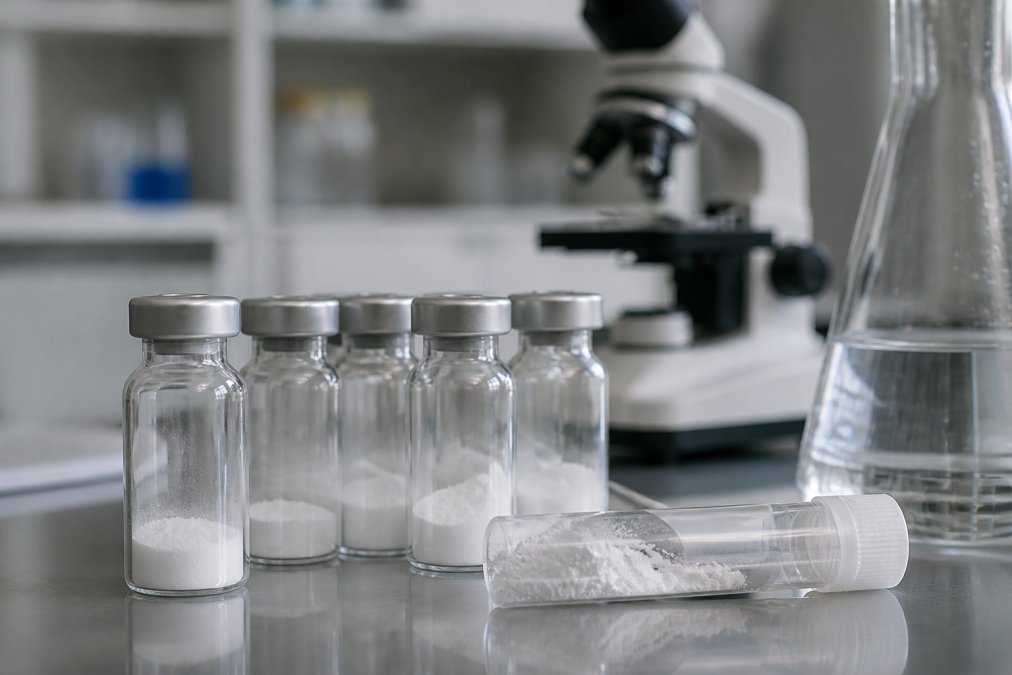
High purity peptides for laboratories are the foundation of reproducible biochemical research. The difference between 95% pure and 99% pure isn't just a number, it's the difference between results you can trust and data you'll have to repeat.
Research-grade peptides eliminate variables that plague lower-purity compounds. Impurities like residual synthesis reagents, truncated sequences, and oxidized variants skew binding assays, cell-based experiments, and structural studies. According to NIH guidance on research materials, laboratories must maintain rigorous documentation of compound purity and sourcing for reproducibility and regulatory compliance.
Blue Wave Compounds has built its reputation on this principle: every batch of high purity peptides undergoes third-party HPLC and mass spectrometry analysis before it ships. That Certificate of Analysis is your proof that what you ordered is what you're using.
Understanding Research-Grade vs. Pharmaceutical-Grade Peptides
Research-grade and pharmaceutical-grade peptides serve different purposes. Research-grade compounds prioritize purity and sequence accuracy for experimental validity. Pharmaceutical-grade peptides meet additional regulatory standards: they're manufactured under GMP (Good Manufacturing Practice) protocols, use validated synthesis equipment, and include extensive batch documentation for clinical trials or commercial production.
For most academic and biotech research, research-grade peptides at 99% purity are sufficient. They deliver the analytical certainty you need without the manufacturing overhead that GMP compliance adds. Pharmaceutical-grade becomes necessary when your peptide is destined for therapeutic development, clinical trials, or diagnostic kits.
The practical choice: start with research-grade high purity peptides for exploratory work and assay development. When a lead candidate moves toward development, transition to pharmaceutical-grade suppliers who can scale manufacturing and provide regulatory infrastructure. Blue Wave Compounds specializes in research-grade peptides, meaning you get the purity and documentation you need for rigorous science without pharmaceutical manufacturing costs.
How to Interpret a Peptide Certificate of Analysis
A Certificate of Analysis (CoA) is your proof of peptide identity and purity. The document should always include three critical elements: sequence verification by mass spectrometry, purity percentage determined by HPLC, and trifluoroacetic acid (TFA) content or salt form specification.
Sequence verification appears as a mass spectrometry result. The observed molecular weight should match your target peptide's theoretical mass within 1-2 Da (Daltons) (peer-reviewed research). If it doesn't, the peptide is truncated, contains an unexpected modification, or is contaminated with a different sequence.
Purity by HPLC is stated as a percentage, typically shown as the area under the curve (AUC) for your target peptide versus all other peaks. A 99% purity reading means your peptide accounts for 99% of the total material. For high purity peptides intended for sensitive assays, anything below 95% should raise questions. For drug discovery applications, 98%+ is the practical standard.
TFA content and salt form matter more than many researchers realize. Peptides are often supplied as TFA salts because TFA aids in precipitation and purification. However, excess TFA can interfere with certain assays and cell-based experiments. A good CoA will specify TFA content as a percentage by weight. If your experiment is sensitive to counterions, request the acetate salt form instead, which Blue Wave Compounds can provide.
Red flags on a CoA: missing mass spectrometry data, HPLC purity below 95% without explanation, no TFA content specification, or a CoA date older than the peptide's shelf life.
HPLC and Mass Spectrometry Peptide Testing Explained
HPLC (High-Performance Liquid Chromatography) and mass spectrometry are the gold standard for peptide characterization. Together, they confirm both what your peptide is and how pure it is.
HPLC separates peptide components based on their chemical properties as they flow through a column. Your target peptide elutes at a specific retention time; impurities elute at different times. A detector measures absorbance at 220 nm, generating a chromatogram showing peaks for each component. The area under your target peptide's peak, divided by the total area of all peaks, gives you the purity percentage.
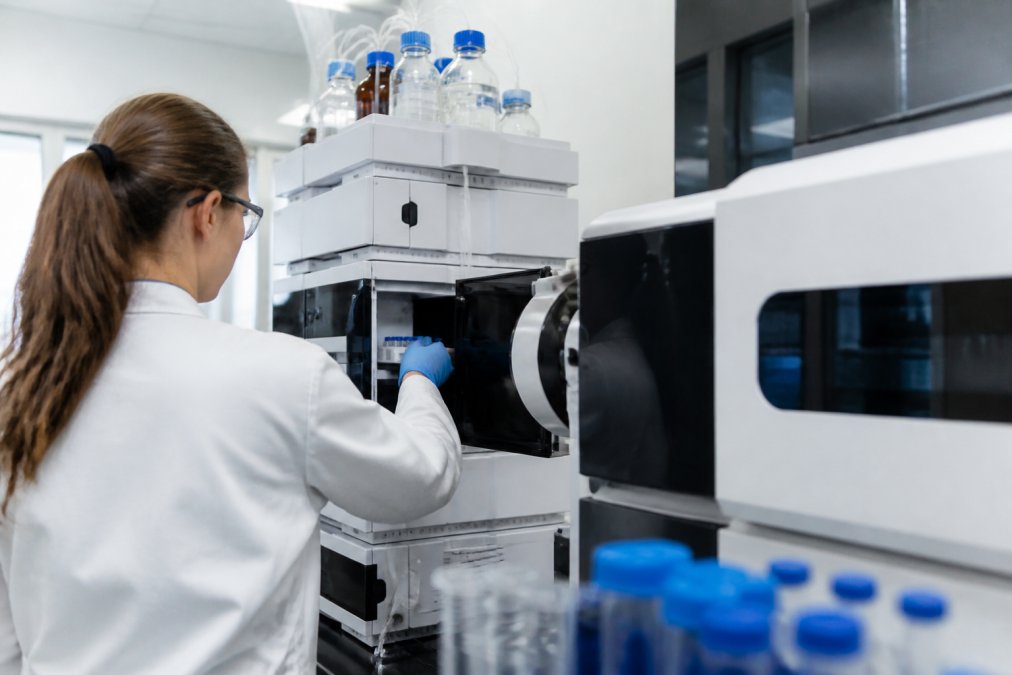
Mass spectrometry measures molecular weight with extraordinary precision. The peptide is ionized and accelerated through a magnetic field; the mass spectrometer records the mass-to-charge ratio. If your target peptide should weigh 1,234.5 Da and the mass spectrum shows 1,234.6 Da, you have the right compound. If it shows 1,100 Da, the peptide is truncated.
Together, HPLC and mass spectrometry answer the two questions every researcher needs answered: Is this the peptide I ordered (mass spectrometry)? And is it pure (HPLC)? Blue Wave Compounds performs both HPLC and mass spectrometry on every batch, providing dual verification that eliminates ambiguity.
Peptide Storage and Stability Protocols for Laboratory Success
Peptide degradation begins the moment synthesis ends. Oxidation, hydrolysis, and proteolytic cleavage are the three main degradation pathways. Your storage protocol determines whether your high purity peptides remain stable for months or degrade within weeks.
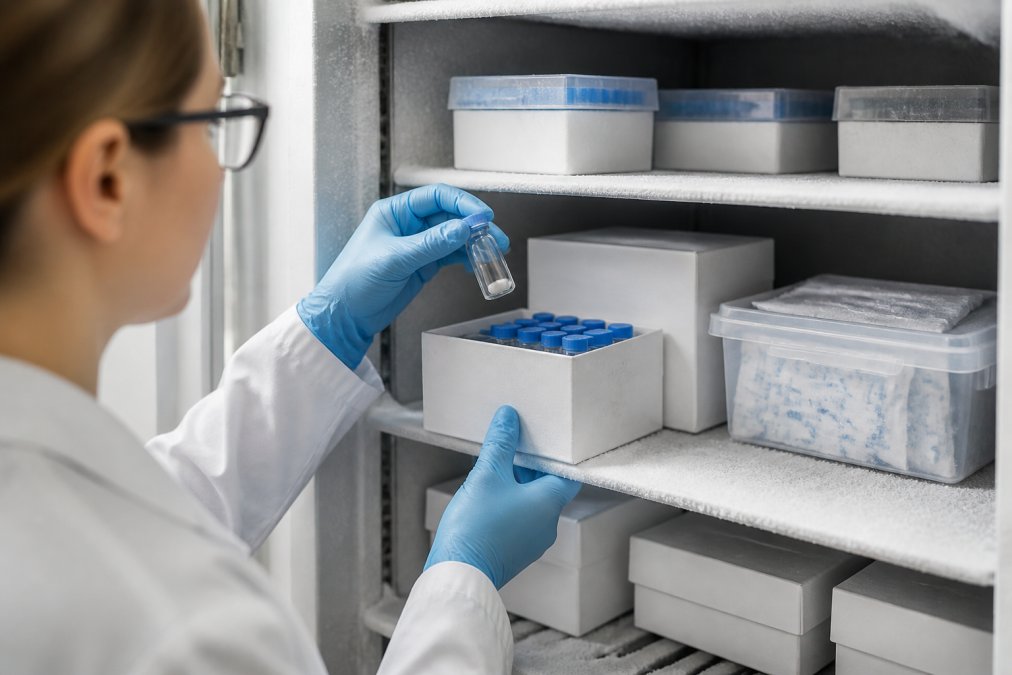
Lyophilized (freeze-dried) peptides are the standard for long-term storage. A lyophilized peptide stored at -20°C can remain stable for 1-2 years; at -80°C, stability extends to 3-5 years or longer (peer-reviewed research). Store in desiccated vials with desiccant packets in sealed containers to minimize moisture reabsorption.
Reconstitution introduces risk. Once you dissolve a lyophilized peptide in aqueous solution, degradation accelerates. Store reconstituted peptides at 4°C for short-term use (up to 2 weeks) or at -20°C for longer periods (up to 3 months). Avoid repeated freeze-thaw cycles; they promote aggregation and oxidation.
Oxidation is particularly problematic for peptides containing methionine or cysteine residues. If your peptide contains these residues, store reconstituted solutions under inert gas (nitrogen or argon) or add antioxidants like ascorbic acid or DTT (dithiothreitol).
Blue Wave Compounds ships peptides in optimized packaging designed to maintain stability during transit. The combination of lyophilized format, sealed vials, and temperature-controlled shipping means your peptides arrive in the same condition as they left the laboratory.
Top Suppliers of High Purity Peptides for Laboratories
Selecting a peptide supplier affects experimental reproducibility and budget. The landscape includes commercial vendors offering catalog peptides, custom synthesis services, and contract manufacturers.
1. Blue Wave Compounds: Third-Party Tested Research-Grade Peptides
Blue Wave Compounds delivers high purity peptides with third-party HPLC and mass spectrometry verification on every batch. The company focuses exclusively on research-grade compounds, meaning you get rigorous analytical testing without pharmaceutical manufacturing costs. Every Certificate of Analysis includes detailed sequence verification, purity percentage, and salt form specification.
Best for: Academic research institutions, biotech companies in early-stage drug discovery, contract research labs, and government-funded research programs where reproducibility and documentation are non-negotiable.
Pros:
- Third-party lab tested with detailed analytical data
- High purity (≥99%) with HPLC and mass spectrometry verification
- Certificates of Analysis provided for every batch
- Fast and discreet shipping designed to prevent degradation
Cons:
- Research-grade focus means not suitable for pharmaceutical or GMP applications
- Catalog is smaller than some competitors, though custom synthesis is available
2. GenScript: Microwave-Assisted Synthesis with Fast Turnaround
GenScript operates one of the world's largest custom peptide synthesis platforms, using microwave-assisted PepPower™ technology to accelerate synthesis. The company offers purity levels from crude to ≥98%, making it suitable for both budget-conscious exploratory work and high-precision applications.
Best for: Researchers needing custom peptides with specific modifications and rapid delivery. GenScript's extensive modification library makes it ideal for complex designs.
Pros:
- Fast turnaround times, with some services completing in 5 business days
- Extensive modification support (acetylation, amidation, labels, etc.)
- Optional TFA exchange service to reduce counterion interference
Cons:
- Pricing varies significantly based on complexity and purity level
- Guaranteed turnaround doesn't include shipping time
3. AAPPTec: Competitive Pricing Across Multiple Purity Levels
AAPPTec positions itself as the cost-conscious choice without sacrificing quality. The company offers synthesis from 2 to 120 amino acids with purity levels ranging from immunological grade (crude) to 98%, allowing labs to match purity to application and budget.
Best for: Laboratories with tight budgets, researchers running parallel experiments where not every batch requires maximum purity, and teams doing antibody production where crude or immunological-grade peptides are sufficient.
Pros:
- Competitive per-residue pricing
- Multiple purity levels allow cost optimization
- Extensive experience with long and complex peptides
- Comprehensive service portfolio including peptide libraries and arrays
Cons:
- Actual prices vary based on peptide hydrophobicity and modifications
- Additional charges apply for HPLC and MS of crude peptides
- Lower purity tiers may introduce experimental noise in sensitive assays
4. AmbioPharm: Large-Scale GMP Manufacturing
AmbioPharm is the choice for researchers whose peptides are destined for pharmaceutical development or clinical trials. The company operates multiple GMP manufacturing suites and handles synthesis scales from grams to multi-kilogram quantities.
Best for: Pharmaceutical and biotech companies scaling peptides toward clinical development, academic institutions commercializing peptide therapeutics, and contract research organizations requiring GMP-compliant manufacturing.
Pros:
- One of the world's largest GMP peptide manufacturers
- Solid-phase, solution-phase, and hybrid synthesis methods
- Extensive process development and scale-up experience
Cons:
- Pricing requires quotation; no transparent pricing available
- GMP manufacturing adds significant cost compared to research-grade
5. AnaSpec: Extensive Catalog with Custom Options
AnaSpec operates a dual model: over 1,000 catalog peptides available for immediate ordering, plus custom synthesis for specialized designs. The catalog includes peptides for cancer, cardiovascular, neuroscience, and immunology research.
Best for: Researchers who want a combination of off-the-shelf reference peptides and custom options. The catalog is useful for validation and control experiments; custom synthesis handles proprietary designs.
Pros:
- Over 1,000 catalog peptides available for immediate ordering
- Fast turnaround for custom synthesis
- Strong expertise in highly complex and modified peptides
- GMP capability for therapeutic applications
Cons:
- Catalog peptides are generally 95% purity, which may be insufficient for high-precision work
- Custom peptide pricing requires quotation
Key Evaluation Criteria for Selecting Your Peptide Supplier
Choosing a peptide supplier requires evaluating several dimensions beyond price.
Analytical Documentation: Demand HPLC and mass spectrometry data on every batch. HPLC alone tells you purity; mass spectrometry confirms sequence identity. Blue Wave Compounds includes both on every Certificate of Analysis, that's the standard to expect.
Purity Consistency: Ask for historical batch data. Do they consistently hit 99% purity, or does it vary between 95% and 99%? Batch-to-batch variability introduces experimental noise.
Salt Form and TFA Content: Specify whether you need TFA salt or acetate salt. Many assays are sensitive to counterions. A supplier that doesn't ask about salt form or provide TFA content specifications isn't thinking about your experimental needs.
Shipping and Stability: How do they package peptides? Are they lyophilized? Do they use temperature-controlled shipping? Peptide degradation during transit is invisible until your assay fails. Blue Wave Compounds' focus on stability-optimized shipping reflects understanding that what arrives matters as much as what leaves the lab.
Regulatory Compliance: If your institution requires vendor compliance documentation, can the supplier provide it? Clarify these requirements early; they affect supplier selection.
Custom Capabilities: Do they offer modifications you might need? Acetylation, phosphorylation, fluorescent labels, cyclization? A supplier with extensive modification options saves time later.
Pricing Transparency: Compare not just per-residue cost but total cost for your typical order. Request a quote for a representative peptide and compare the all-in cost.
Conclusion
High purity peptides for laboratories are non-negotiable for reproducible research. The difference between 95% and 99% purity is the difference between results you can publish and data you'll have to repeat. HPLC and mass spectrometry verification confirm both identity and purity. A Certificate of Analysis that includes both tests, detailed batch documentation, and stable storage protocols reflects a supplier that understands research-grade standards.
Blue Wave Compounds delivers third-party tested high purity peptides with the analytical rigor your experiments demand. Every batch undergoes HPLC and mass spectrometry analysis; every Certificate of Analysis documents sequence verification, purity percentage, and salt form. Optimized shipping means you're not just buying a peptide, you're buying confidence in your experimental results.
=== FAQ ANSWERS (audit these too, same rules) ===
[1] Q: How do I verify that high purity peptides are actually 99% pure and not just marketing claims? A: Legitimate suppliers provide a Certificate of Analysis (CoA) with each batch showing third-party test results from HPLC and mass spectrometry analysis. Request the actual test data before ordering, not just the purity percentage. Look for vendors who offer money-back guarantees if results don't match specifications, this demonstrates confidence in their quality. BlueWaveCompound includes third-party lab testing and CoAs with every batch to verify purity claims.
[2] Q: What should I look for in a peptide certificate of analysis interpretation? A: A proper CoA should list the peptide's molecular weight, sequence verification results, purity percentage (ideally ≥99%), and the testing methods used (HPLC and mass spectrometry). Check for batch number, synthesis date, and expiration information. The CoA should identify any salt form (acetate, TFA, or hydrochloride) and residual solvent levels. If the CoA lacks these details or uses vague language, request clarification before accepting the shipment.
[3] Q: Why is HPLC and mass spectrometry peptide testing critical for laboratory work? A: HPLC separates peptide components by molecular properties, revealing impurities and confirming purity percentage. Mass spectrometry confirms the exact molecular weight and detects degradation products or contaminants. Together, these methods provide definitive proof of peptide identity and quality. For drug discovery, epitope mapping, and bioavailability studies, these analytical tests ensure your results are reproducible and scientifically valid, not compromised by impure starting materials.
[4] Q: How should I store high purity peptides to maintain their stability? A: Store lyophilized peptides in a freezer at -20°C or below in a sealed, dry container away from light. Keep desiccants in the vial to prevent moisture absorption. Once reconstituted, store solutions at 4°C if used within days, or freeze at -20°C for longer storage. Avoid repeated freeze-thaw cycles, which degrade peptides through proteolytic degradation. Always check the supplier's specific stability protocols and expiration date, peptide storage and stability protocols vary by composition and salt form.
[5] Q: What's the difference between research-grade and pharmaceutical-grade peptides? A: Research-grade peptides meet high purity standards (typically ≥99%) for laboratory studies and are verified through HPLC and mass spectrometry. Pharmaceutical-grade peptides undergo additional regulatory compliance testing for therapeutic use and must meet cGMP standards. For academic research, drug discovery, and diagnostic applications, research-grade peptides with proper documentation and third-party testing are sufficient and more cost-effective than pharmaceutical-grade options.
Frequently Asked Questions
Q: How do I verify that high purity peptides are actually 99% pure and not just marketing claims?
A: Legitimate suppliers provide a Certificate of Analysis (CoA) with each batch showing third-party test results from HPLC and mass spectrometry analysis. Request the actual test data before ordering, not just the purity percentage. Look for vendors who offer money-back guarantees if results don't match specifications, this demonstrates confidence in their quality. BlueWaveCompound includes third-party lab testing and CoAs with every batch to verify purity claims.
Q: What should I look for in a peptide certificate of analysis interpretation?
A: A proper CoA should list the peptide's molecular weight, sequence verification results, purity percentage (ideally ≥99%), and the testing methods used (HPLC and mass spectrometry). Check for batch number, synthesis date, and expiration information. The CoA should identify any salt form (acetate, TFA, or hydrochloride) and residual solvent levels. If the CoA lacks these details or uses vague language, request clarification before accepting the shipment.
Q: Why is HPLC and mass spectrometry peptide testing critical for laboratory work?
A: HPLC separates peptide components by molecular properties, revealing impurities and confirming purity percentage. Mass spectrometry confirms the exact molecular weight and detects degradation products or contaminants. Together, these methods provide definitive proof of peptide identity and quality. For drug discovery, epitope mapping, and bioavailability studies, these analytical tests ensure your results are reproducible and scientifically valid, not compromised by impure starting materials.
Q: How should I store high purity peptides to maintain their stability?
A: Store lyophilized peptides in a freezer at -20°C or below in a sealed, dry container away from light. Keep desiccants in the vial to prevent moisture absorption. Once reconstituted, store solutions at 4°C if used within days, or freeze at -20°C for longer storage. Avoid repeated freeze-thaw cycles, which degrade peptides through proteolytic degradation. Always check the supplier's specific stability protocols and expiration date, peptide storage and stability protocols vary by composition and salt form.
Q: What's the difference between research-grade and pharmaceutical-grade peptides?
A: Research-grade peptides meet high purity standards (typically ≥99%) for laboratory studies and are verified through HPLC and mass spectrometry. Pharmaceutical-grade peptides undergo additional regulatory compliance testing for therapeutic use and must meet cGMP standards. For academic research, drug discovery, and diagnostic applications, research-grade peptides with proper documentation and third-party testing are sufficient and more cost-effective than pharmaceutical-grade options.
For researchers evaluating suppliers, the decision ultimately hinges on one question: Can you trust the purity claim? Blue Wave Compounds answers that with third-party lab testing and detailed documentation. That's the standard your research deserves.
This article was written using GrandRanker