 how-to
Interpreting a Peptide Certificate of Analysis
Table of Contents
- What a Peptide Certificate of Analysis Actually Contains
- HPLC vs Mass Spectrometry Peptide Analysis: What Each Test Proves
- Peptide Purity Standards: What the Numbers Actually Mean
- Common Contaminants and What COA Testing Should Flag
- Lab Accreditation Standards and Why They Validate a COA
- Identifying Fake Peptide COAs: Red Flags and Verification Steps
- Interpreting a Peptide Certificate of Analysis: A Step-by-Step Checklist
- Conclusion
Last Updated: August 18, 2026
What a Peptide Certificate of Analysis Actually Contains
A peptide certificate of analysis is a formal document issued by a testing laboratory that records the analytical results for a specific batch of synthesized peptide compound. It functions as the primary quality control record, providing researchers with verified data on identity, purity, and composition before a compound enters an experiment.
Most researchers scan a COA and move on. That's a mistake. The document contains far more diagnostic information than a single purity percentage, and understanding its full structure separates confident experimental design from costly downstream errors.
At BlueWaveCompound, every batch ships with a complete third-party COA.
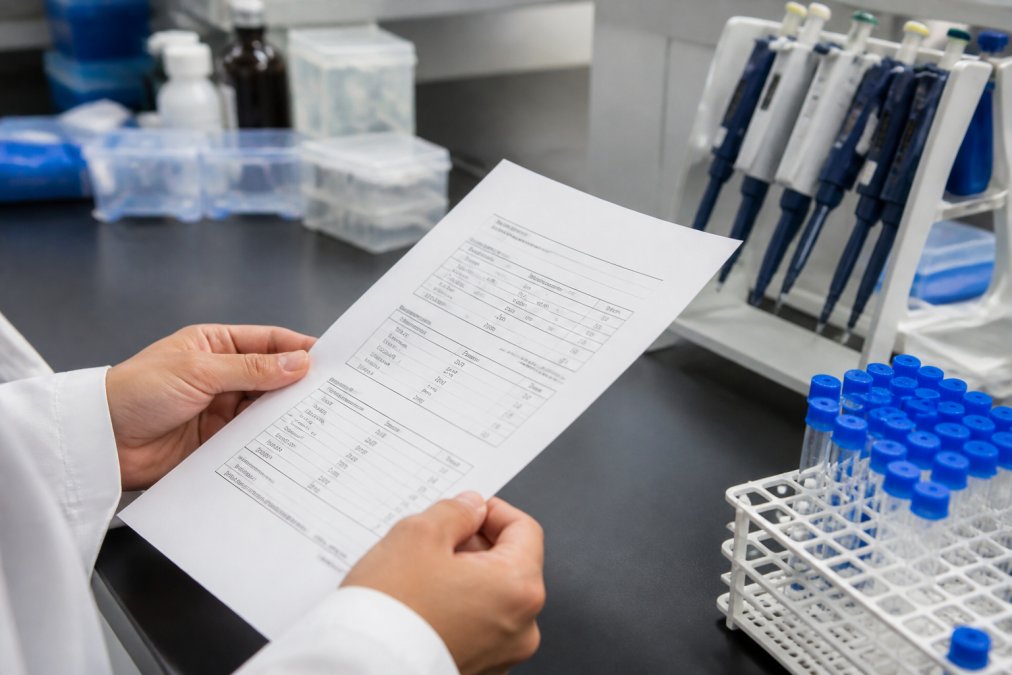
Visual COA Anatomy: Reading the Document Section by Section
A well-structured COA follows a consistent layout. Reading it section by section, rather than jumping straight to the purity number, is the correct approach.
Header block: Contains the compound name, molecular formula, molecular weight, CAS number (if applicable), and catalog or lot number. Testing laboratory identification: Lists the issuing lab's name, address, accreditation number, and the analyst's signature or stamp. Absence of this information is an immediate red flag. Analytical methods section: Specifies which tests were performed, typically HPLC for purity and mass spectrometry for identity confirmation. Results table: Reports purity percentage, observed molecular weight, and any additional assays such as residual solvent testing or heavy metal analysis. Acceptance criteria: States the minimum acceptable result for each parameter. A COA without defined acceptance criteria offers no basis for pass/fail determination. Expiration and storage conditions: Documents the recommended storage temperature and the compound's tested stability window.
Batch Number, Traceability, and Sample Integrity Fields
The batch number is the COA's traceability anchor. Every analytical result ties back to a specific synthesized lot, meaning the data is only valid for that exact batch. Researchers ordering across multiple timeframes should verify that the batch number on the COA matches the vial label precisely.
Sample integrity fields document how the sample was handled before testing: whether it arrived as a lyophilized powder, the mass submitted for analysis, and any observed physical characteristics. Traceability also matters for reproducibility, when a batch performs well experimentally, the batch number lets you reorder the same lot or request a new batch tested to identical specifications. This is particularly important for long-running studies where inter-batch variability could confound results.
HPLC vs Mass Spectrometry Peptide Analysis: What Each Test Proves
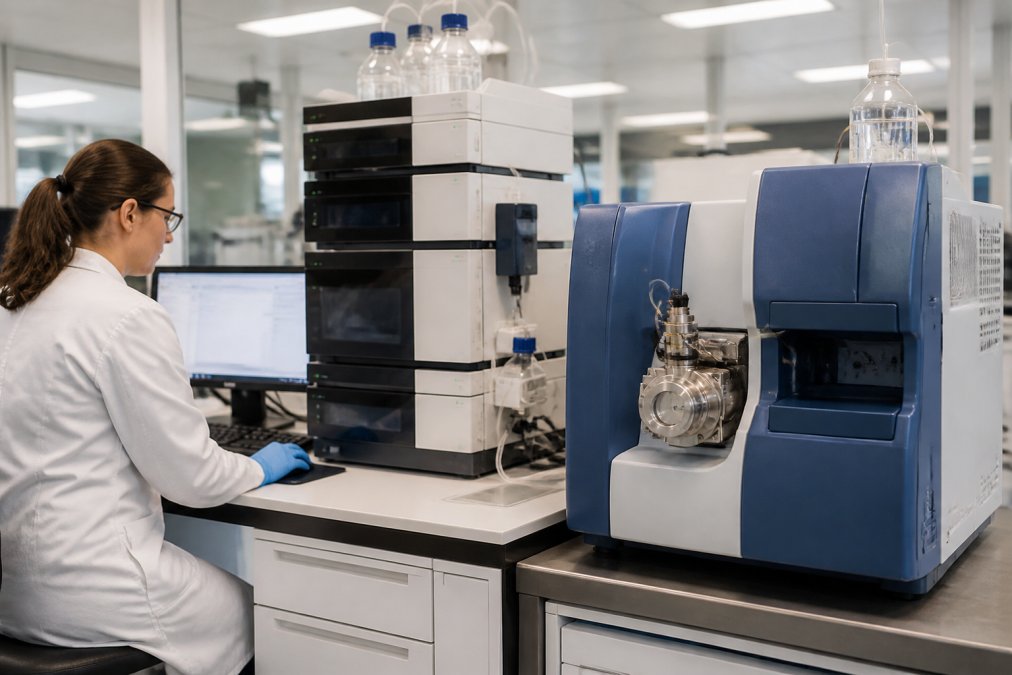
HPLC and mass spectrometry address two entirely different questions, and a COA that only reports one of them is incomplete. HPLC measures purity; mass spectrometry confirms identity. Both are necessary, and neither substitutes for the other.
| Test | What It Measures | Key Output | Limitation |
|---|---|---|---|
| HPLC | Purity relative to detected peaks | Purity percentage, chromatogram | Cannot confirm molecular identity |
| Mass Spectrometry | Molecular mass of detected species | Observed vs. expected MW | Cannot quantify impurity levels |
| Both combined | Purity + confirmed identity | Full analytical picture | Neither detects all contaminants alone |
Reading Chromatogram Data: Retention Time and Peak Integration
The HPLC chromatogram is a graphical record of compound separation over time. The horizontal axis represents retention time, the point at which each component elutes from the column. The vertical axis represents detector response, typically UV absorbance.
Peak integration calculates the area under each detected peak and expresses it as a percentage of total peak area. The purity percentage reported on the COA is derived directly from this integration. A clean, well-resolved main peak with minimal shouldering indicates high purity; multiple peaks of similar height suggest significant impurity content; a broad, asymmetric main peak may indicate co-eluting species that inflate the apparent purity percentage. Peak integration is only as reliable as the method's limit of detection, impurities below the detection threshold won't appear on the chromatogram.
Molecular Weight Confirmation via Mass Spectrometry Spectra
Mass spectrometry confirms that the dominant species in the sample has the expected molecular weight. The COA should report both the expected molecular weight and the observed value from the MS analysis. A match within acceptable tolerance confirms compound identity. A mismatch indicates a synthesis error, incomplete deprotection, or oxidation artifact.
According to guidance from the United States Pharmacopeia on analytical method validation, identity testing by mass spectrometry should include a reference standard comparison to distinguish the target compound from structurally similar analogs.
Peptide Purity Standards: What the Numbers Actually Mean
Purity percentage on a peptide COA represents the proportion of the main compound relative to all UV-absorbing species detected by HPLC. Research-grade peptides used in biochemical assays generally require a minimum of 95% purity, with many applications demanding 98% or higher. Structural studies, receptor binding assays, and in vitro pharmacological work typically specify ≥99% purity to minimize the risk of impurity-driven artifacts.
Purity vs. Potency and Why the Distinction Matters
Purity and potency are not the same measurement, and conflating them is one of the most common errors in peptide procurement.
Purity describes the chemical composition of the sample: what fraction is the target compound versus everything else. Potency describes biological activity: how effectively the compound produces its intended effect at a given concentration. A peptide can be chemically pure but biologically inactive if it has degraded or been stored incorrectly. A COA provides the purity data; biological validation provides the potency data. Neither document tells the complete story alone.
Common Contaminants and What COA Testing Should Flag
Residual synthesis byproducts are the most frequently encountered contaminants in research peptides, including truncated sequences, deletion analogs, and incompletely deprotected side chains. HPLC will detect these as additional peaks if they are present above the method's limit of detection.
Beyond synthesis-related impurities, a comprehensive COA should address:
- Residual solvents: Solvents used in synthesis and purification, such as acetonitrile, TFA, and DMF, can remain in the final lyophilized powder. The FDA guidance on residual solvents in pharmaceutical products provides widely referenced limits that many research-grade labs use as benchmarks.
- Heavy metals: Metal contamination can originate from synthesis equipment or reagents. Heavy metal analysis, typically by ICP-MS, detects trace metals such as lead, arsenic, cadmium, and mercury.
- Endotoxins: For peptides used in cell culture or in vivo studies, endotoxin contamination is a critical concern. Endotoxin testing (LAL assay) should be specified separately and is not a standard component of all COAs.
- Water content: Lyophilized peptides absorb atmospheric moisture. Karl Fischer titration quantifies water content, which affects accurate mass-based concentration calculations.
A COA that only reports HPLC purity and MS identity, with no mention of residual solvents or heavy metals, is providing partial documentation.
Lab Accreditation Standards and Why They Validate a COA
The value of a COA depends entirely on the credibility of the laboratory that issued it. ISO/IEC 17025 is the primary international standard for testing and calibration laboratory competence. Accreditation to this standard, granted by bodies such as A2LA (American Association for Laboratory Accreditation) or NVLAP (National Voluntary Laboratory Accreditation Program), confirms that the lab operates validated methods, maintains calibrated instrumentation, and follows documented standard operating procedures.
When evaluating a COA, verify the following: the issuing lab's accreditation number is listed on the document; the accreditation scope covers the specific test methods used (HPLC, MS, etc.); and the accreditation is current, not expired. According to A2LA's requirements for ISO/IEC 17025 accreditation, accredited labs must demonstrate method validation, proficiency testing participation, and ongoing quality control to maintain their certification.
Identifying Fake Peptide COAs: Red Flags and Verification Steps
Fabricated and altered COA documents exist in the research peptide supply chain. Researchers who cannot distinguish a genuine analytical report from a manipulated one are exposed to real experimental risk.
Signs of Data Manipulation in Analytical Reports
The most common manipulation techniques leave detectable traces: suspiciously round numbers (authentic HPLC purity results rarely land exactly on 99.0%); mismatched fonts or formatting in the results table; generic chromatograms that appear identical across multiple COAs for different compounds; missing spectra; no analyst signature or lab contact; and dates that don't align (the testing date should precede the issue date).
How to Verify a Third-Party Laboratory's Credentials
- Search the accreditation body's public database. A2LA and NVLAP both maintain searchable online directories. Enter the lab name and confirm that the accreditation is active and covers the relevant test methods.
- Cross-reference the lab's address and contact information. Verify that the address on the COA matches the lab's registered location.
- Request a sample COA before ordering. Any reputable third-party lab will provide an example document.
- Check for method-specific accreditation. Confirm that the lab's accredited scope includes HPLC purity testing and mass spectrometry.
- Ask for the raw data file. Authentic labs retain and can provide chromatogram files and spectra on request.
Interpreting a Peptide Certificate of Analysis: A Step-by-Step Checklist
Use this checklist when evaluating any peptide certificate of analysis before approving a compound for experimental use.
Step 1: Confirm compound identity fields [Time: 2 minutes]
- Compound name matches your order specification
- Molecular formula is correct for the target sequence
- Molecular weight matches the theoretical value (within ±0.5 Da for small peptides)
- Batch/lot number matches the vial label
Step 2: Evaluate the issuing laboratory [Time: 5 minutes]
- Lab name, address, and accreditation number are present
- Accreditation is verified as active via A2LA or NVLAP database
- Analyst signature or authorized signatory is present
- Testing date precedes issue date
Step 3: Review HPLC purity data [Time: 3 minutes]
- Purity percentage meets your application's minimum threshold (typically ≥95% for research, ≥99% for sensitive assays)
- Chromatogram is present and shows a dominant main peak
- Retention time is reported
- Peak integration method is specified
Step 4: Confirm MS identity [Time: 2 minutes]
- Observed molecular weight is reported numerically
- Observed value matches expected molecular weight within acceptable tolerance
- Charge states or adducts are interpreted correctly
Step 5: Check for extended testing [Time: 2 minutes]
- Residual solvent results are present (or absence of testing is noted and accepted)
- Heavy metal analysis is present if required by your application
- Water content (Karl Fischer) is reported if mass-based concentration calculations are critical
- Endotoxin testing is confirmed if compound will be used in cell culture or in vivo work
Step 6: Authenticate the document [Time: 3 minutes]
- Purity values are not suspiciously round
- Chromatogram appearance is consistent with reported purity
- No formatting inconsistencies in results table
- Lab contact information is verifiable
For researchers working with BlueWaveCompound, third-party COAs accompany every batch and are available for review before shipping. The documentation covers HPLC purity and MS identity as standard, with extended testing available on request for applications requiring residual solvent or heavy metal data.
According to NIH guidelines on research reagent quality and documentation, consistent documentation practices for research compounds are a foundational requirement for experimental reproducibility and data integrity in federally funded research.
Verifying peptide quality documentation is not a formality. It's the step that determines whether your experimental results reflect biology or batch-to-batch compound variance. BlueWaveCompound provides third-party lab-tested peptides with full COA documentation, high purity at ≥99%, and a money-back guarantee designed to remove procurement risk. Browse the full catalog and request COA documentation before you order.
Frequently Asked Questions
What is a Certificate of Analysis for peptides?
A Certificate of Analysis (COA) is a formal document issued by an analytical laboratory that records the test results for a specific batch of peptide. It typically includes HPLC purity percentage, mass spectrometry identity confirmation, batch number, molecular weight, and any contaminant screening results. The COA serves as the primary quality control record, allowing researchers to verify that the compound meets the purity and identity specifications required for their experimental protocols before use.
What are the acceptable purity levels for research-grade peptides?
For most biochemical research applications, a purity of 95% or higher as measured by HPLC is considered acceptable. More demanding applications, such as binding assays, receptor studies, or quantitative dose-response experiments, typically require peptide purity at or above 98-99%. Peptide purity standards vary by application, so researchers should confirm the minimum threshold their specific assay requires before ordering. A COA from a third-party laboratory is the standard method for verifying that a compound meets the stated purity specification.
What is the difference between HPLC and Mass Spectrometry results on a COA?
HPLC measures purity by separating the components in a sample and calculating each component's proportion of the total peak area in the chromatogram. It tells you how much of the sample is the target peptide versus impurities. Mass spectrometry confirms identity by measuring the molecular weight of the compound and comparing it against the theoretical molecular weight of the target sequence. Both tests are necessary: HPLC alone cannot confirm identity, and mass spectrometry alone cannot quantify purity.
How can you tell if a peptide COA is fake?
Several red flags indicate a fabricated or altered document. These include round-number purity figures with no decimal precision, chromatograms with unusually perfect peak shapes, missing batch numbers or lot traceability fields, no reference to an ISO-accredited or otherwise credentialed third-party laboratory, and inconsistencies between the stated molecular weight and the mass spectrometry spectra shown. You can also contact the listed laboratory directly to confirm the report is on file. Legitimate suppliers provide COAs that link to verifiable, independent analytical testing.
This article was written using GrandRanker