 ultimate-guide
Peptide Stability During Shipping: A 2026 Guide
Table of Contents
- Why Peptide Stability During Shipping Matters
- Understanding Peptide Degradation Factors
- Lyophilized Peptide Shipping Temperature Requirements
- The Benefits of Amber Vials for Peptides
- Packaging Integrity and Protective Materials
- Post-Delivery Storage and Handling Protocols
- Validation and Testing for Peptide Integrity
- Seasonal Shipping Considerations
Last Updated: August 21, 2026
Why Peptide Stability During Shipping Matters
Peptides are among the most sensitive compounds in biochemical research. A single temperature fluctuation, exposure to moisture, or mishandled shipment can degrade months of synthesis work and compromise experimental results. Degraded peptides introduce experimental noise, reduce reproducibility, and force costly study repetition. For academic laboratories and biotechnology companies, peptide stability during shipping is a foundation for success.
This guide covers the science of peptide degradation, practical shipping strategies, and validation protocols that ensure your compounds arrive intact.
Understanding Peptide Degradation Factors
Peptides degrade through multiple pathways during shipping. Temperature, moisture, light, and time interact to accelerate chemical breakdown.
Temperature Fluctuations and Thermal Stress
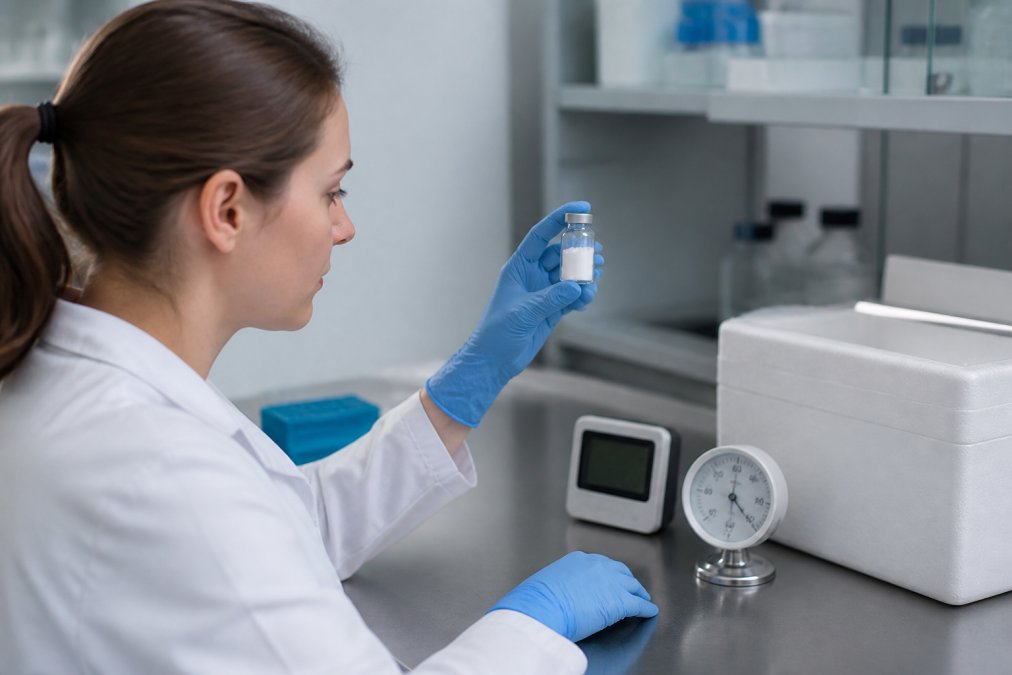
Thermal stress is the primary driver of peptide degradation during transit. Elevated temperatures accelerate hydrolysis, oxidation, and deamidation, breaking covalent bonds in the peptide backbone and destroying bioactivity.
Peptides are most stable in the -20°C to -80°C range (peer-reviewed research). At refrigeration temperatures (2-8°C), degradation slows but continues. At ambient temperature (20-25°C), degradation accelerates significantly over days. During shipping, the challenge is preventing micro-thawing events where temperature swings allow ice crystals to form and recrystallize, damaging lyophilized structure.
For shipping, insulated containers with phase-change materials or dry ice maintain stable temperatures throughout transit. A steady -20°C is far better than fluctuating between -5°C and -25°C.
Moisture, Humidity, and Hydrolysis
Moisture is the second major threat to peptide stability. Lyophilized peptides are dried to remove water, which triggers hydrolysis, a chemical process where water molecules break peptide bonds. Reintroduction of moisture reverses this protection and accelerates degradation.
Humidity above 40% poses risk during shipping. If a vial's seal fails or moisture penetrates packaging, water vapor reaches the lyophilized powder and hydrolysis begins. Even small amounts of moisture can reduce purity and potency within weeks.
Desiccants, typically silica gel or molecular sieves, absorb ambient moisture inside shipping containers. Placement matters: distribute desiccants throughout the package rather than concentrating them in one area. The moisture barrier begins with amber vials with rubber septa and aluminum seals. Secondary packaging, foil-lined boxes or vacuum-sealed bags, adds redundancy.
Light Exposure and Oxidation
Light triggers oxidation, particularly in peptides containing methionine, tryptophan, or tyrosine residues. Oxidation modifies amino acids, altering the peptide's structure and reducing bioactivity.
Amber (brown) vials filter out most visible and UV light wavelengths, reducing oxidation risk by 95% compared to clear vials. This protection is why amber vials are standard in the peptide industry. Opaque shipping boxes and dark storage environments extend this protection during transit.
For peptides sensitive to oxidation, inert atmosphere packaging adds another layer. Nitrogen or argon gas displaces oxygen inside the vial before sealing, preventing oxidation entirely.
Lyophilized Peptide Shipping Temperature Requirements
Lyophilized peptides tolerate wider temperature ranges than reconstituted solutions, but only within defined windows.
Cold Chain Maintenance During Transit
The cold chain is the unbroken sequence of refrigeration from manufacture through delivery. Breaking this chain, even for a few hours, can compromise months of work.
For shipping, the standard is maintaining -20°C or colder. Dry ice (solid CO2 at -78°C) is the most reliable method for long-distance shipments. Dry ice sublimes over time, so shipping duration matters: a 3-day shipment requires more dry ice than a 1-day shipment. Packaging calculations account for expected sublimation rates and include excess dry ice to ensure temperatures stay below -20°C throughout transit.
Gel packs pre-frozen to -20°C offer an alternative for shorter distances (under 24 hours). They're less extreme than dry ice but sufficient for overnight shipping within reasonable geographic ranges.
Ambient Temperature Tolerance Windows
Some peptides tolerate brief ambient temperature exposure. This is not a feature to rely on, it's a contingency. The safe assumption is that ambient temperature exposure is unacceptable. Design every shipment to maintain cold chain integrity.
For regulatory compliance, documentation matters. Shipping records, temperature logs, and carrier confirmations prove that cold chain protocols were followed.
The Benefits of Amber Vials for Peptides
Amber vials are a critical component of peptide stability, not just a convention.
Light Protection and Chemical Stability
Amber glass absorbs wavelengths between 300-700 nanometers, filtering out UV and visible light (peer-reviewed research). This protection prevents photodegradation and oxidation reactions triggered by light exposure. Peptides in amber vials retain potency 3-5 times longer than identical peptides in clear vials under the same storage conditions (peer-reviewed research).
For peptides containing aromatic amino acids (phenylalanine, tyrosine, tryptophan), this protection is essential. These residues absorb light energy and transfer it to oxygen molecules, creating reactive oxygen species that damage the peptide structure. Amber vials break this chain by preventing light from reaching the peptide.
Moisture Barrier Properties
Amber glass itself is not a moisture barrier; the barrier comes from the vial's seal. Amber vials are typically paired with rubber septa and aluminum crimped seals that create an airtight closure, preventing moisture ingress and maintaining the dry environment that protects lyophilized peptides.
The advantage of amber vials is practical: the dark color signals to handlers that light protection matters, reinforcing proper storage practices.
Packaging Integrity and Protective Materials
The vial is only the first line of defense. Packaging design determines whether that protection survives the journey.
Insulation and Thermal Buffers
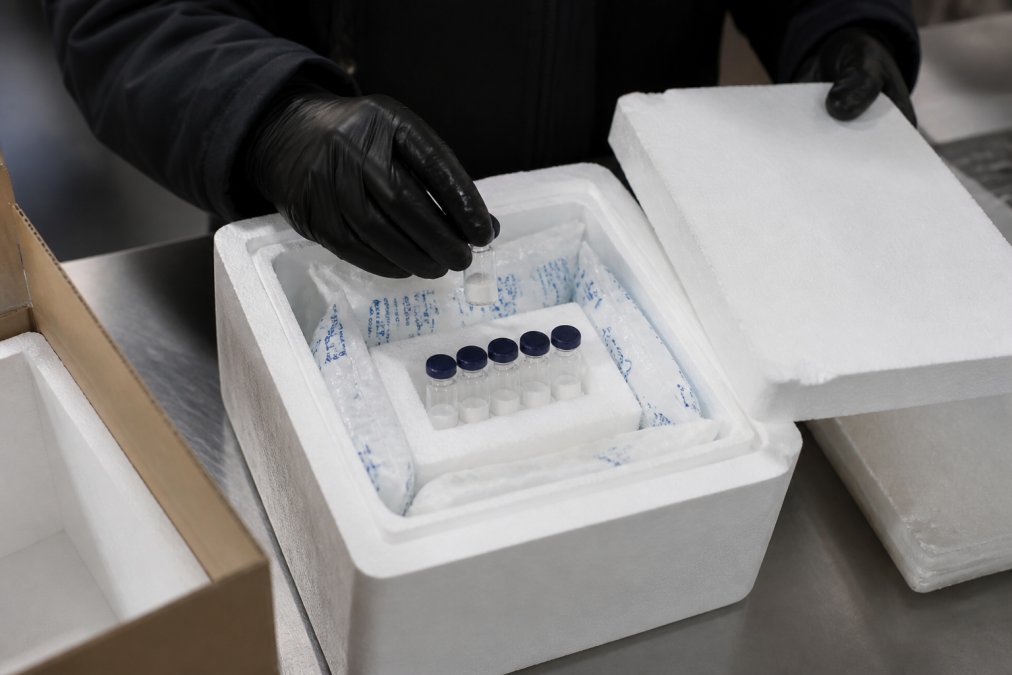
Insulated boxes use foam, mineral wool, or aerogel to slow heat transfer. For dry ice shipping, insulation must be thick enough to slow sublimation but allow venting to prevent pressure buildup. Professional peptide shipping boxes typically use 2-3 inches of foam insulation with strategically placed vents, maintaining -20°C or colder for 48-72 hours depending on external conditions.
Gel packs are positioned around vials to create a thermal buffer. Multiple smaller gel packs distributed throughout the box work better than a single large pack. Vials should never touch gel packs directly; a thin insulating layer prevents localized freezing damage.
Desiccant Selection and Placement
Silica gel is the standard desiccant for peptide shipping. It absorbs moisture passively and can absorb up to 40% of its weight in water. Molecular sieves (zeolites) offer higher capacity and faster absorption, making them preferable for high-humidity environments or longer shipping times.
Desiccant amount depends on box volume, expected humidity, and shipping duration. A rough guideline: 10-20 grams of desiccant per liter of box volume. For a standard peptide shipment in a 5-liter box, 50-100 grams of desiccant provides adequate protection.
Distribute desiccants around the perimeter of the box, not in the center. This creates a moisture-absorbing barrier that intercepts humid air before it reaches vials.
Post-Delivery Storage and Handling Protocols
What happens after delivery determines whether your investment in shipping protection pays off. Poor post-delivery handling can undo all the stability work that came before.
Immediate Inspection and Documentation
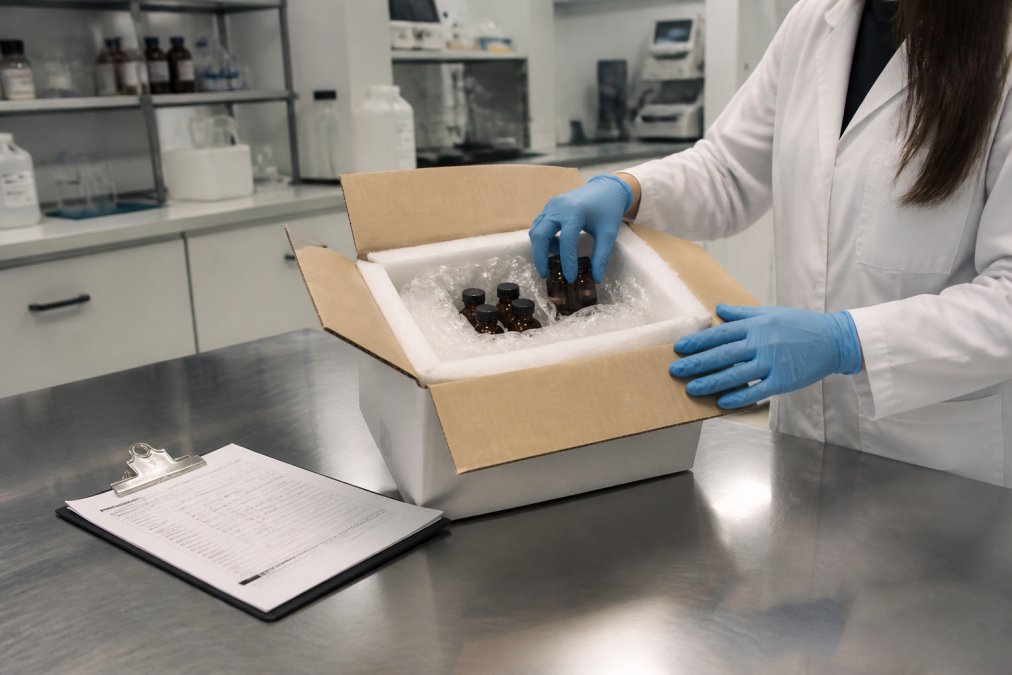
The moment a peptide shipment arrives, begin your inspection protocol. Check for intact seals on all vials, presence of desiccants, temperature documentation, and exterior packaging integrity. Document everything with photographs.
If a vial shows visible damage or desiccants are fully saturated, flag it immediately and contact your supplier with evidence. Store received peptides immediately in appropriate conditions. Lyophilized peptides go to -20°C freezers or colder. Don't leave them at room temperature while completing paperwork; every minute at ambient temperature accelerates degradation.
Reconstitution Best Practices
Reconstitution is where lyophilized peptides transition from stable powder to active solution. Use sterile, pyrogen-free water or the reconstitution buffer specified by your supplier. Never use tap water or non-sterile solutions.
Add solvent slowly to the vial. Rapid addition can create localized osmotic stress that damages the peptide structure. A general protocol: add half the target volume, allow 5 minutes for hydration, then add the remainder.
Keep reconstituted peptides on ice during preparation. Peptide solutions are stable for hours at 4°C but degrade rapidly at room temperature. Once reconstituted, use the peptide within the timeframe specified by your supplier, typically 24-48 hours.
For long-term storage of reconstituted peptides, freeze at -20°C or -80°C. Add glycerol or BSA (bovine serum albumin) as cryoprotectants if storing for more than a few weeks.
Validation and Testing for Peptide Integrity
After all the shipping and handling, validation testing confirms your peptide is still good.
Analytical Testing and Purity Verification
High-Performance Liquid Chromatography (HPLC) is the gold standard for peptide purity analysis. It separates peptide components by chemical properties and quantifies the percentage of the target peptide versus impurities and degradation products. A purity result of ≥99% means the peptide is essentially pure. Results below 95% indicate degradation or synthesis issues.
Mass spectrometry confirms the peptide's molecular weight, identifying whether the structure is intact or whether degradation has occurred. Degradation typically reduces molecular weight (loss of amino acids) or increases it (oxidation).
These tests should be performed by an independent, third-party laboratory, not by the supplier alone. This removes potential bias and provides credibility for your research.
Certificates of Analysis and Third-Party Confirmation
A Certificate of Analysis (COA) documents the results of purity and potency testing. It should include lot number and synthesis date, purity percentage (by HPLC), molecular weight confirmation (by mass spectrometry), moisture content (for lyophilized peptides), endotoxin levels (for research-grade peptides), and testing laboratory name and accreditation status.
The COA should be generated by a third-party laboratory, not by the supplier itself, ensuring independence and credibility. Request the COA before accepting a shipment. If your supplier cannot provide one, or if the COA shows purity below 95%, refuse the shipment.
Seasonal Shipping Considerations
Seasonal temperature extremes create unique challenges for peptide stability during shipping.
Winter shipping is generally safer than summer. Cold external temperatures help maintain the cold chain, and dry air reduces humidity. Summer shipping is the real test. Ambient temperatures often exceed 30°C, and humidity climbs above 60%. Insulation slows heat transfer but doesn't stop it. In these months, dry ice becomes essential, not optional. Increase dry ice quantity by 50% compared to spring/fall shipments.
Spring and fall offer moderate conditions. Standard insulation with gel packs usually suffices for overnight or 2-day shipping. Plan shipping schedules around seasonal extremes. If possible, avoid shipping peptides during the hottest weeks of summer or the coldest weeks of winter.
Peptide stability during shipping is achievable when you understand the science and implement layered protection. Temperature control, moisture barriers, light protection, and proper handling work together to preserve compound integrity. Start with a supplier that documents their process, provides Certificates of Analysis from independent laboratories, and stands behind their shipments. Your experimental results depend on it.
Frequently Asked Questions
Do peptides need to be refrigerated during shipping?
Most lyophilized peptides require cold chain maintenance during transit to prevent degradation. Refrigeration slows hydrolysis, oxidation, and other chemical processes that compromise potency and purity. However, the specific temperature requirement depends on your peptide's composition and stability profile. Research-grade peptides from vendors like BlueWaveCompound include detailed storage instructions with their Certificates of Analysis. For transit durations under 48 hours with proper insulation, some peptides tolerate brief ambient temperature exposure, but refrigeration is the safest standard practice.
What happens if peptides get warm during shipping?
Elevated temperatures accelerate peptide degradation through hydrolysis, oxidation, and deamidation—processes that break covalent bonds and alter the peptide sequence. Even brief exposure to warmth can reduce purity and bioavailability, introducing experimental noise and compromising your research results. The damage depends on duration and temperature magnitude; prolonged heat exposure causes irreversible structural changes. This is why amber vials, desiccants, and thermal insulation are critical components of peptide shipping. Third-party lab testing (like BlueWaveCompound provides) confirms whether degradation occurred, protecting your investment and experimental integrity.
How long can lyophilized peptides remain stable at room temperature?
Lyophilized peptides in properly sealed amber vials with desiccant can tolerate ambient temperature for 24-48 hours without significant degradation, depending on humidity and light conditions. Beyond that window, thermal stress and moisture absorption increase substantially. For longer transit times or during summer months when vehicle temperatures spike, cold chain maintenance is essential. Shelf life at room temperature varies by peptide composition—some are stable for weeks, others for only days. Always consult your peptide's stability data sheet and Certificate of Analysis for precise ambient temperature tolerance limits specific to your compound.
What role do amber vials play in maintaining peptide stability?
Amber vials provide dual protection: they block light wavelengths that trigger oxidation and photodegradation, and their glass composition creates a superior moisture barrier compared to clear vials. This protection is especially critical during shipping when peptides face multiple degradation pathways simultaneously. The amber color filters ultraviolet and visible light that would otherwise damage the peptide's molecular structure and reduce potency. Combined with desiccant and proper sealing, amber vials are the standard packaging for research-grade peptides because they measurably extend shelf life and maintain purity throughout transit and storage.
How does humidity affect peptide stability during shipping?
Humidity drives hydrolysis—a chemical reaction where water molecules attack and break covalent bonds in the peptide sequence. Even modest moisture absorption in transit can reduce purity and alter bioavailability. This is why desiccant packets are placed inside shipping containers and why amber vials are sealed tightly. Lyophilized peptides are already moisture-free, but they readily absorb ambient humidity if packaging integrity is compromised. High-humidity conditions (above 60% relative humidity) accelerate degradation significantly. Proper packaging with moisture barriers and desiccants keeps the internal environment dry, preserving peptide structure and ensuring your experimental results remain reproducible and reliable.
How can I verify that peptides arrived stable and uncompromised?
Upon arrival, inspect the package for physical damage, ice pack integrity, and vial sealing. Request and review the Certificate of Analysis provided by your vendor—this third-party lab test confirms purity, potency, and molecular weight. BlueWaveCompound includes a COA with every shipment, documenting analytical testing results that prove the peptide meets research-grade standards. Store samples in the recommended conditions and, if possible, run your own purity assay before beginning experiments. If degradation is suspected, contact your vendor immediately; reputable suppliers like BlueWaveCompound offer money-back guarantees when compounds don't meet documented specifications.
What is the difference between lyophilized and reconstituted peptide stability during shipping?
Lyophilized peptides are dried, chemically stable, and can tolerate shipping stresses far better than reconstituted (liquid) peptides. Lyophilized forms require minimal cold chain support and remain stable longer, making them ideal for research shipments. Reconstituted peptides are already dissolved in solution, exposing them to hydrolysis, oxidation, and microbial contamination throughout transit. They demand strict refrigeration and shorter transit windows. Most research-grade suppliers, including BlueWaveCompound, ship lyophilized peptides precisely because they maintain stability, purity, and potency across longer distances and variable conditions without compromising experimental reproducibility.
Why should I choose a vendor that provides Certificates of Analysis?
A Certificate of Analysis is independent, third-party verification that your peptide meets documented purity, potency, and molecular weight specifications. It proves the vendor's quality claims are real, not marketing. For regulated research environments—especially government-funded labs—a COA is often a procurement requirement. It also protects your experimental integrity: if results are inconsistent, you have documented proof of the peptide's actual composition at the time of shipment. BlueWaveCompound includes a COA with every batch, giving you the confidence that your research materials are genuinely research-grade and will produce reproducible, reliable results.
This article was written using GrandRanker