 ultimate-guide
Peptide Storage and Handling Guidelines
Table of Contents
- Peptide Storage and Handling: Core Principles
- Temperature Requirements for Short-term Storage
- Long-term Storage Protocols at -80°C
- Lyophilized Peptide Stability and Moisture Control
- Peptide Reconstitution Best Practices
- Managing Peptide Freeze-Thaw Cycle Degradation
- Troubleshooting Degraded Peptides and Recovery Protocols
- Conclusion
- Frequently Asked Questions
Last Updated: September 1, 2026
Peptide Storage and Handling: Core Principles
Proper peptide storage and handling is the foundation of reproducible research. Whether you're working with lyophilized powders or reconstituted solutions, how you store and manage peptides directly determines whether your experimental results remain reliable or degrade over time. At BlueWaveCompound, we've observed that many research labs lose significant value from peptide batches simply because storage protocols weren't followed rigorously, a preventable loss that compounds across multiple experiments.
The core challenge is that peptides are inherently unstable molecules. They're sensitive to temperature fluctuations, moisture, light exposure, and oxidative damage. Each of these factors degrades peptide integrity at different rates depending on the specific amino acid sequence, the peptide's molecular weight, and environmental conditions. Understanding these vulnerabilities isn't academic, it directly impacts your experimental noise, batch reproducibility, and ultimately, the confidence you can place in your results.
This guide covers the practical steps for storing and handling peptides across every stage of the research workflow. We'll walk through temperature requirements, long-term protocols, reconstitution best practices, and troubleshooting approaches for peptides that show signs of degradation. By the end, you'll have a complete framework for maintaining peptide integrity from receipt through experimental use.
Temperature Requirements for Short-term Storage
Short-term peptide storage typically spans days to weeks. For this timeframe, temperature control is your primary lever for slowing degradation.
Most lyophilized peptides remain stable at 2-8°C (refrigerator temperature) for 2-4 weeks without significant loss of purity or activity (peer-reviewed research). This is the standard holding temperature for peptides awaiting reconstitution or use. The key is consistency, temperature swings between 2°C and 15°C cause more damage than stable storage at a slightly warmer temperature because freeze-thaw cycles initiate hydrolysis and promote oxidative damage.
Room temperature (18-25°C) is acceptable for short-term storage only if your peptide is hydrophobic or if you're working within a 48-72 hour window. Hydrophilic peptides degrade faster at room temperature, particularly if they contain methionine or tryptophan residues, which oxidize readily when exposed to air and warmth.
For reconstituted peptide solutions, refrigeration at 2-8°C is essential. A dissolved peptide loses stability much faster than lyophilized form because the aqueous environment accelerates hydrolysis and bacterial contamination becomes a concern. Store reconstituted peptides in sterile, sealed vials and plan to use them within 1-2 weeks. If you won't use the solution within that window, freeze aliquots at -20°C instead.
Long-term Storage Protocols at -80°C
For storage beyond 4 weeks, an ultrafreezer operating at -80°C is the industry standard. At this temperature, chemical degradation slows dramatically, peptides can remain stable for months to years if handled correctly.
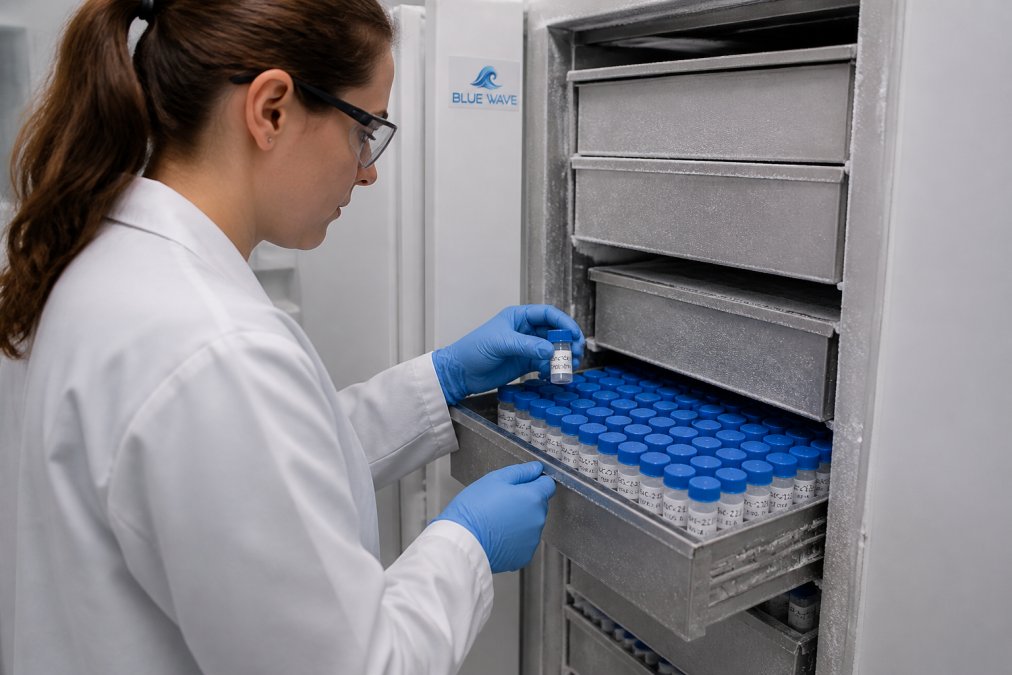
The mechanism behind -80°C storage is straightforward: enzymatic activity and chemical reaction rates drop exponentially at very low temperatures. However, -80°C is not a complete preservation solution. Oxidative damage still occurs, though much more slowly, and freeze-thaw cycles remain problematic even at this temperature.
Best practices for -80°C storage:
-
Use a dedicated research-grade ultrafreezer, not a standard laboratory freezer. Standard freezers cycle through temperature fluctuations that can degrade peptides. Research-grade units maintain stable -80°C with minimal temperature variance.
-
Store peptides in microcentrifuge tubes or vials designed for cryogenic use. Standard plastic tubes become brittle at -80°C and can crack, exposing peptides to moisture and contamination.
-
Place peptide vials in a secondary container, a cryogenic box or rack, to prevent direct contact with the freezer surface and to organize batches by project or date.
-
Never store peptides directly on the freezer shelf. The coldest zone near the compressor can drop below -85°C, and temperature gradients across the freezer create microclimates where some areas thaw slightly during defrost cycles.
-
Keep a freezer log documenting which peptide batches are stored, their location, and the date added. This prevents lost samples and helps you track which batches have been in storage longest.
-
Minimize freezer door openings. Each time the door opens, warm air enters and the internal temperature rises briefly. Over weeks, these fluctuations accumulate and accelerate degradation.
Liquid nitrogen storage (-196°C) offers even longer stability but introduces complexity: vials must be sealed to prevent liquid nitrogen from entering, and your institution must have trained personnel and proper safety infrastructure. For most academic and biotech labs, -80°C is the practical choice.
Lyophilized Peptide Stability and Moisture Control
Lyophilized peptides are peptides that have been freeze-dried to remove water. This form is the most stable for long-term storage because water is removed, and water is what drives hydrolysis, the chemical breakdown of peptide bonds.
However, lyophilized peptides are hygroscopic, meaning they absorb moisture from the air. A lyophilized sample exposed to humid air will gradually rehydrate, and once water is present, degradation accelerates. This is why desiccation is critical.
Moisture control strategies:
Store lyophilized peptides in sealed vials with a desiccant packet (silica gel) inside the vial or in the storage box. The desiccant absorbs ambient moisture and maintains a dry microenvironment around the peptide powder. Replace desiccant packets every 6 months if peptides are stored at room temperature, or annually if stored at -20°C or colder.
Vacuum-sealed vials are superior to standard sealed vials. A vacuum removes air, which reduces oxidative damage and prevents moisture from entering. If your peptides arrive in vacuum-sealed packaging, keep them sealed until you're ready to use them.
Inert atmosphere storage, using nitrogen or argon gas, is the gold standard for sensitive peptides. The peptide vial is flushed with inert gas before sealing, displacing oxygen. This eliminates oxidative damage entirely. For peptides containing methionine, tryptophan, or cysteine, inert atmosphere storage extends shelf life significantly.
Store desiccated vials in a cool, dark location. Light exposure accelerates oxidation, particularly for aromatic amino acids. A dark cabinet at room temperature is acceptable for short-term desiccated storage (weeks), but -20°C in darkness is better for months-long storage.
Peptide Reconstitution Best Practices
Reconstitution, dissolving lyophilized peptide in a buffer solution, is where many labs introduce avoidable degradation. The moment a peptide dissolves in water, it becomes vulnerable to hydrolysis, oxidation, and bacterial contamination.
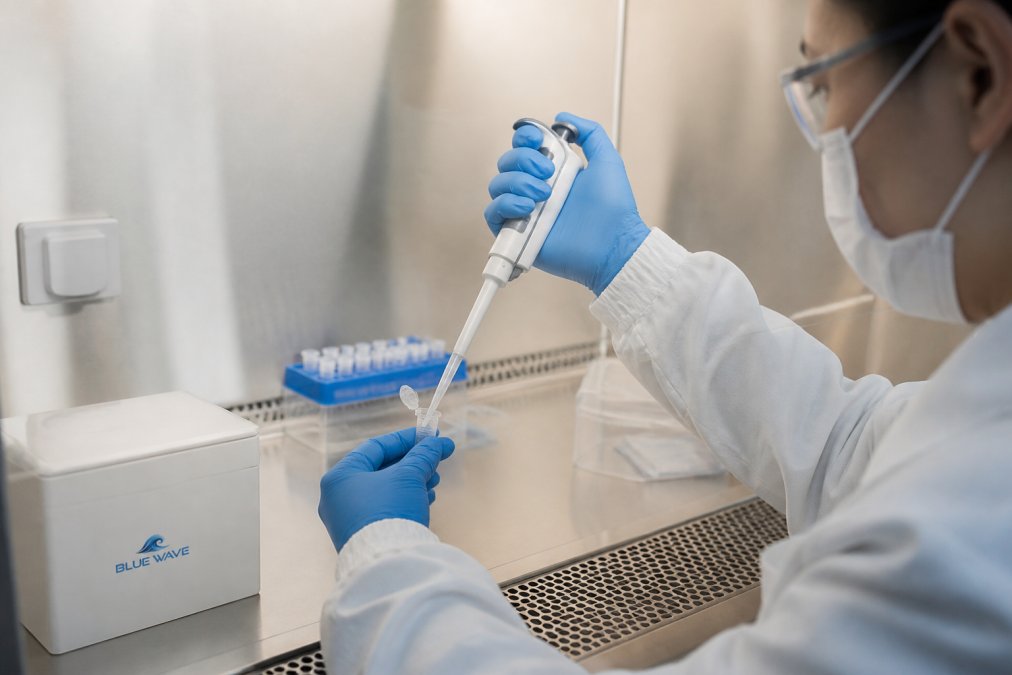
Step-by-step reconstitution protocol:
-
Calculate the correct volume. Determine the concentration you need (e.g., 10 mM stock solution). Use the peptide's molecular weight and the mass provided on the Certificate of Analysis to calculate the volume of buffer required. A common mistake is adding too little buffer, which creates a supersaturated solution that precipitates or aggregates.
-
Select the appropriate buffer. Phosphate-buffered saline (PBS) works for most peptides, but pH sensitivity varies. Some peptides are stable only in acidic buffers (pH 3-5), while others prefer neutral or slightly basic conditions (pH 7-8). If the peptide was originally synthesized in a specific buffer, use that same buffer for reconstitution, the peptide has already adapted to it.
-
Use sterile technique. Work in a laminar flow hood or biosafety cabinet if available. At minimum, work in a clean area and use sterile pipette tips, tubes, and buffers. Bacterial contamination in a reconstituted peptide solution is invisible but will consume the peptide and produce byproducts that interfere with experiments.
-
Add buffer slowly. Don't dump the entire buffer volume into the vial at once. Add buffer in small increments (50 µL at a time for a 1 mg peptide), allowing the peptide to dissolve gradually. This reduces the risk of aggregation and ensures uniform dissolution.
-
Allow time for dissolution. After adding buffer, let the vial sit for 5-15 minutes without agitation. Gentle swirling is acceptable; vigorous vortexing introduces air and promotes oxidation. Some peptides take time to fully dissolve, and forcing dissolution by heating or aggressive mixing causes damage.
-
Prepare aliquots immediately. Once reconstituted, divide the solution into small aliquots (10-50 µL per tube, depending on your experimental needs). Single-use aliquots prevent repeated exposure to air and contamination. Freeze aliquots at -20°C or -80°C.
Buffer selection matters more than many labs realize. According to research on peptide stability in different pH environments, peptides show dramatically different degradation rates depending on buffer pH and ionic strength. A peptide stable for weeks in one buffer may degrade in days in another.
Managing Peptide Freeze-Thaw Cycle Degradation
Freeze-thaw cycles are among the most damaging stresses a peptide solution can experience. Each time a frozen solution thaws, ice crystals form and dissolve, concentrating solutes and creating localized pH shifts and osmotic stress. Peptides can aggregate, precipitate, or hydrolyze during these events.
A single freeze-thaw cycle causes measurable loss of peptide activity, typically 5-15% depending on the peptide and buffer (peer-reviewed research). Multiple cycles compound the damage. A peptide thawed three times may have lost 30-40% of its original activity, even if it was stored correctly between cycles.
Strategies to minimize freeze-thaw damage:
Aliquoting is the most effective approach. Prepare small aliquots (10-50 µL) immediately after reconstitution and freeze them separately. Use one aliquot at a time; never thaw an entire batch and refreeze the remainder. This approach eliminates repeat freeze-thaw cycles for the bulk of your peptide stock.
Flash-freezing reduces ice crystal formation. Instead of placing a tube in a -20°C freezer where it thaws slowly, immerse it briefly in liquid nitrogen (5-10 seconds), then transfer to a -80°C freezer. The rapid temperature drop minimizes ice crystal size and reduces osmotic stress.
Cryoprotectants like glycerol or DMSO can be added to peptide solutions before freezing. These compounds lower the freezing point and reduce ice formation. However, cryoprotectants can interfere with some experiments, so use them only if your downstream assay tolerates them. Typical concentrations are 10-20% v/v.
Store frozen aliquots in a -80°C freezer, not a -20°C freezer. The warmer temperature of a -20°C freezer allows more molecular motion, and the solution may partially thaw during temperature fluctuations, promoting degradation.
Troubleshooting Degraded Peptides and Recovery Protocols
Despite careful storage, peptides sometimes degrade. Recognizing the signs and understanding the underlying cause helps you decide whether to use the batch, attempt recovery, or discard it.
Common signs of peptide degradation:
A reconstituted peptide solution that appears cloudy or has visible particles suggests aggregation or precipitation. This typically indicates pH drift, osmotic stress, or contamination. Hold the vial up to light, if you see particles, the peptide is likely compromised.
A strong odor (musty, sour, or chemical smell) indicates bacterial contamination or chemical breakdown. Discard the solution immediately.
Loss of expected experimental results, lower signal, higher background, or inconsistent replicates, can signal peptide degradation, though other causes (instrument drift, reagent issues) are also possible. If results suddenly change with a new peptide batch from the same supplier, degradation is likely.
Discoloration (yellowing or browning) indicates oxidative damage, particularly in peptides containing aromatic amino acids. This is visible evidence that the peptide has been exposed to light or oxygen.
Recovery approaches:
If a lyophilized peptide shows signs of moisture uptake (clumping or discoloration in the powder), it may still be usable if the degradation is mild. Reconstitute it at a slightly higher concentration than normal to account for potential loss of activity. Run a test experiment before committing the entire batch to critical work.
If a reconstituted solution is slightly cloudy but has no odor, gentle centrifugation (10,000 × g for 5 minutes) may clarify it by removing aggregates. The supernatant may be usable if the protein concentration remains acceptable.
If a peptide has partially degraded but you have no alternative, use it for preliminary or optimization experiments where lower purity is acceptable. Reserve high-purity batches for final, publication-quality work.
For peptides that are critical to your research, request a Certificate of Analysis from your supplier before use. At BlueWaveCompound, every batch is third-party lab tested and accompanied by a Certificate of Analysis, which documents the exact purity and confirms that the peptide meets specifications before it ships. This verification step prevents surprises downstream.
Conclusion
Peptide storage and handling is not complex, but it demands consistency. Temperature control, moisture management, minimized freeze-thaw cycles, and proper reconstitution technique are the four pillars of peptide stability. When these are in place, your peptides remain reliable across experiments, your results reproduce, and your research progresses faster.
If you're sourcing peptides for critical work, start with a supplier committed to stability and documentation. BlueWaveCompound provides research-grade peptides that are third-party lab tested, accompanied by a Certificate of Analysis, and designed to maintain integrity through proper storage and handling. Visit bluewavecompounds.com to explore our peptide offerings and request a quote tailored to your research needs.
Frequently Asked Questions
What is the correct way to store peptides?
Store lyophilized peptides in a sealed container with desiccant at -80°C for long-term stability. For short-term storage (days to weeks), refrigeration at 2-8°C works if peptides remain in sealed, airtight containers. Always protect from light and moisture. Reconstituted peptides should be aliquoted into sterile microcentrifuge tubes and stored at -20°C or -80°C depending on your timeline. Use inert atmosphere (nitrogen or argon) in storage vials when possible to minimize oxidative damage. BlueWaveCompound's research-grade peptides arrive optimized for these protocols with full documentation on your Certificate of Analysis.
How long can peptides remain unrefrigerated without degradation?
Lyophilized peptides can tolerate ambient temperature for 24-48 hours without significant degradation if kept dry and protected from light. Reconstituted peptides degrade much faster at room temperature and should not remain unrefrigerated for more than 2-4 hours. Temperature, humidity, and peptide sequence all affect this timeline. Hydrophobic or oxidation-sensitive peptides degrade faster than others. For experiments requiring high reproducibility, minimize ambient exposure and return samples to appropriate cold storage immediately after use. If you receive peptides from BlueWaveCompound, store them according to the handling protocol included with your Certificate of Analysis.
What are the best practices for reconstituting peptides to prevent degradation?
Use sterile, pyrogen-free buffer solutions at pH matched to your peptide's isoelectric point. Prepare fresh buffer or verify its pH and sterility before use. Add buffer slowly to lyophilized peptide to avoid foaming and sample loss. Use sterile technique throughout: work in a biosafety cabinet or clean bench, use sterile pipette tips, and avoid touching vial interiors. Gently mix by inversion rather than vigorous vortexing to minimize oxidative stress. Aliquot reconstituted peptide immediately into smaller sterile tubes to reduce freeze-thaw cycles. Store aliquots at -20°C for short-term use (weeks) or -80°C for long-term storage (months to years). Document reconstitution date, buffer composition, and storage temperature for reproducibility.
How can researchers minimize freeze-thaw cycles for high-purity compounds?
Plan your experiment workflow to retrieve only the aliquot you need in a single session. Pre-aliquot reconstituted peptides into small volumes (50-100 µL) immediately after reconstitution so you thaw only what you use. Label aliquots clearly with date and contents. Store the bulk of your stock at -80°C and keep only one working aliquot at -20°C. Each freeze-thaw cycle causes some degradation through ice crystal formation and osmotic stress. Limit cycles to no more than 3-4 for most peptides; sensitive compounds should never exceed 2 cycles. If you must refreeze, do so quickly and at -80°C rather than -20°C to minimize ice crystal damage.
What environmental factors most commonly cause peptide oxidation or hydrolysis?
Oxidative damage occurs when peptides containing methionine or cysteine residues contact oxygen, especially at room temperature or under light exposure. Hydrolysis accelerates in acidic or basic conditions and at elevated temperatures. Moisture promotes both oxidation and hydrolysis by enabling chemical reactions. Light exposure, particularly UV wavelengths, triggers photodegradation. Bacterial or fungal contamination introduces enzymes that degrade peptides. Store peptides in opaque, airtight containers with desiccant and minimal headspace. Use inert atmosphere (nitrogen or argon) when possible. Keep storage temperatures stable and below 0°C. Protect from direct light. Use sterile technique to prevent microbial contamination. BlueWaveCompound's third-party lab testing confirms initial purity; your handling practices determine how long that purity is maintained.
How does temperature affect the long-term stability of research-grade peptides?
Each 10°C increase roughly doubles the rate of chemical degradation (Arrhenius principle). At room temperature (20-25°C), most peptides degrade noticeably within weeks. At 2-8°C (refrigeration), degradation slows significantly, extending shelf life to several months. At -20°C, stability improves further, supporting storage for 6-12 months. At -80°C, degradation is minimal, and properly stored peptides remain stable for years. Lyophilized peptides are more temperature-sensitive than reconstituted ones because moisture content increases degradation rates. Avoid temperature fluctuations; stable cold storage is better than variable conditions. If your ultrafreezer fails or defrosts, thawed peptides should be used promptly rather than refrozen.
Are there specific storage requirements for different peptide sequences?
Yes. Peptides with oxidation-prone residues (methionine, cysteine, tryptophan) require inert atmosphere storage and protection from light. Hydrophobic peptides may need organic solvents or special buffers to remain soluble and prevent aggregation. Peptides with charged residues are pH-sensitive and require buffer solutions matched to their isoelectric point. Some sequences are prone to hydrolysis in acidic conditions and need neutral or slightly basic buffers. Your Certificate of Analysis from BlueWaveCompound includes sequence-specific guidance on storage buffer, temperature, and handling precautions. If your peptide sequence is unusual or you are unsure of its stability profile, contact the supplier with your sequence details before storage.
This article was written using GrandRanker