 listicle
Reliable Peptide Sources for Laboratories: 2026 Guide
Table of Contents
- What Makes a Reliable Peptide Source
- Third-Party Lab Testing for Peptides: What You Need to Know
- How to Verify Peptide Certificate of Analysis Before Purchase
- Top Reliable Peptide Suppliers: Feature Comparison
- Research-Grade Peptide Procurement Best Practices
- Avoiding Low-Quality Peptide Suppliers
- Conclusion
Last Updated: August 22, 2026
What Makes a Reliable Peptide Source
Finding reliable peptide sources for laboratories requires understanding what separates premium suppliers from mediocre ones. The difference isn't just purity percentages on a label, it's the infrastructure, documentation, and testing rigor behind every batch.
A reliable peptide source maintains multiple layers of quality assurance: third-party lab testing, detailed Certificates of Analysis, and traceable batch-specific documentation. Without these, you're trusting marketing claims instead of verifiable data.
BlueWaveCompound and other leading suppliers understand that research-grade peptides demand rigorous analytical validation, stability testing, and shipping protocols designed to prevent degradation.
Purity Verification and Analytical Standards
High-purity research-grade peptides start with rigorous analytical validation. The industry standard for premium suppliers is ≥99% purity, verified through multiple analytical methods (peer-reviewed research). This directly impacts experimental reproducibility.
When evaluating reliable peptide sources, look for suppliers using high-performance liquid chromatography and mass spectrometry to confirm molecular weight and sequence verification. These techniques provide concrete proof of purity rather than theoretical claims. A supplier who publishes batch-specific analytical reports demonstrates confidence in their product.
Even small contaminants introduce experimental noise. A peptide at 95% purity introduces 5% variability into your results; at 99%+ purity, that noise drops dramatically (peer-reviewed research). The best suppliers also specify what constitutes the remaining 1%, residual synthesis byproducts, water content, or trifluoroacetic acid from purification. Transparency here separates premium sources from vendors hiding behind vague specifications.
Documentation and Traceability Requirements
Every batch of research-grade peptides should arrive with complete traceability documentation: lot numbers, synthesis dates, testing dates, and specific analytical methods used. Without this, you cannot correlate experimental results to material quality.
Supply chain transparency has become non-negotiable for serious research institutions. Purchasing agents increasingly require vendors to document manufacturing standards, storage conditions, and shipping protocols.
Third-Party Lab Testing for Peptides: What You Need to Know
Third-party lab testing transforms peptide sourcing from a trust-based transaction into a verification-based one. When an independent laboratory validates your supplier's claims, you gain objective proof of quality. A supplier testing their own products can inadvertently bias results; an independent lab has no stake in the outcome.
HPLC and Mass Spectrometry Validation
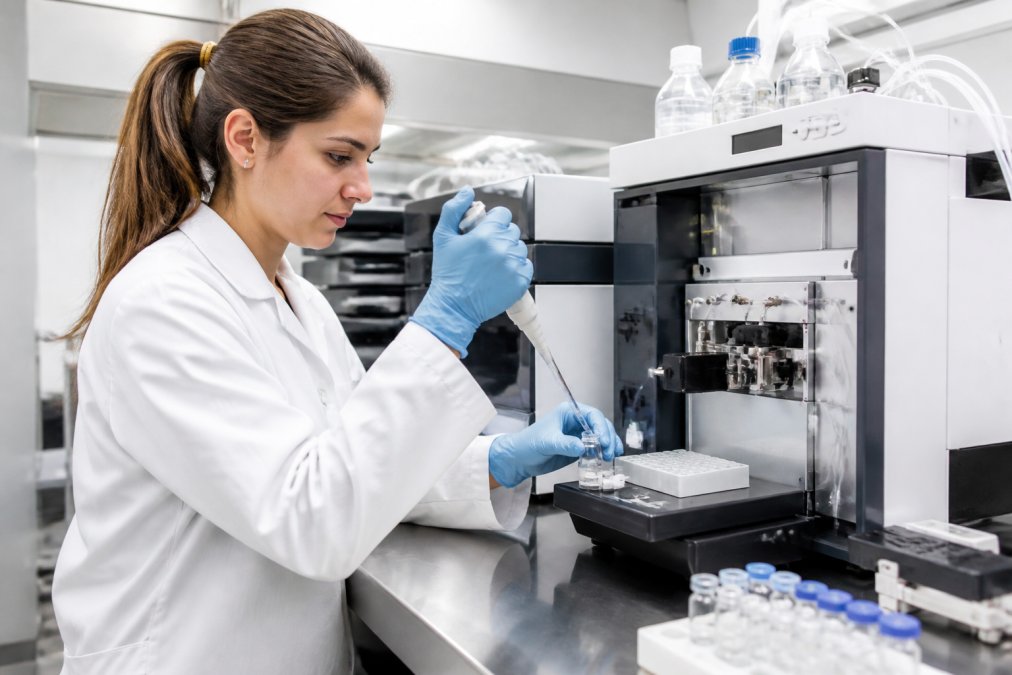
High-performance liquid chromatography separates peptide components and measures purity with precision. Mass spectrometry confirms the exact molecular weight, proving the peptide matches the claimed sequence. Together, these techniques provide bulletproof validation.
HPLC pushes a liquid sample through a column packed with fine particles. Different compounds move through at different speeds, separating them. A detector measures what comes out, creating a chromatogram showing purity percentage. Mass spectrometry ionizes the peptide and measures its exact mass-to-charge ratio, confirming the correct sequence was synthesized.
The best suppliers provide both HPLC and mass spectrometry results on every batch. HPLC alone is incomplete; mass spec alone without HPLC purity data is equally insufficient.
Endotoxin Testing and Safety Assays
Research-grade peptides used in cell culture or in vivo studies must be tested for endotoxins, bacterial lipopolysaccharides that trigger inflammatory responses. Even trace amounts contaminate experimental results.
Endotoxin testing uses the Limulus Amebocyte Lysate assay, detecting endotoxins at parts-per-billion sensitivity (the FDA). A reliable peptide source includes endotoxin test results on every batch, typically reporting levels below 10 EU/mg. Unexplained inflammatory responses in cell culture often trace back to contaminated peptides; sourcing from suppliers who test proactively saves time and materials.
How to Verify Peptide Certificate of Analysis Before Purchase
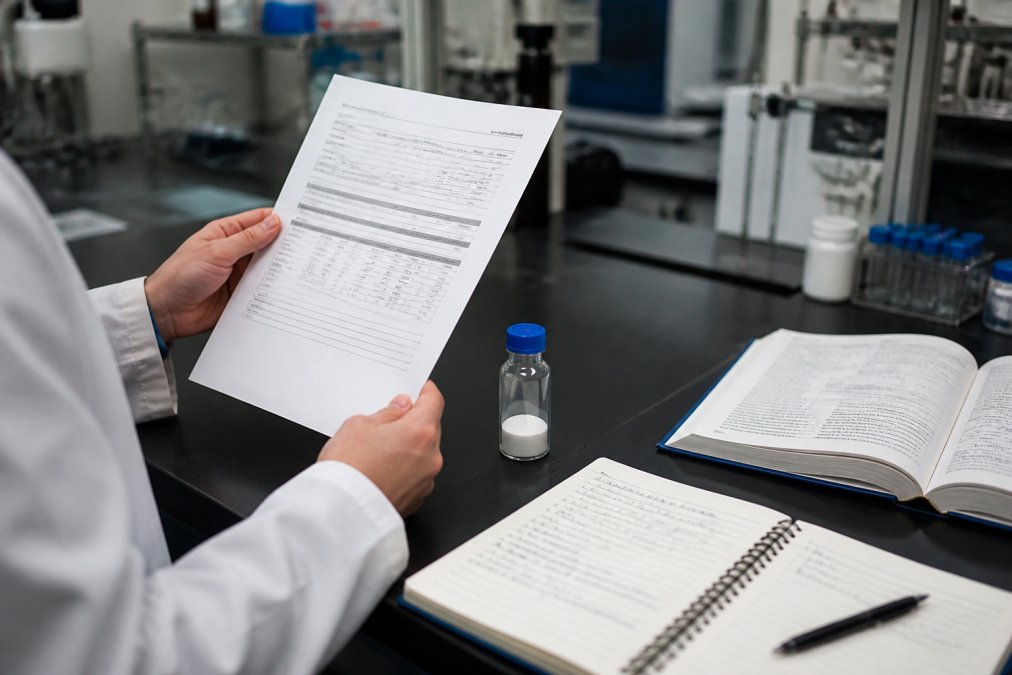
A Certificate of Analysis is your primary defense against low-quality peptides. The CoA should list the lot number, synthesis date, and testing date. Cross-reference these with your purchase order to confirm you're receiving the exact batch you ordered.
Reading Lot Numbers and Batch-Specific Data
Each lot number corresponds to a specific synthesis batch. Never assume all batches from the same supplier are identical. Manufacturing conditions, reagent sources, and environmental factors vary batch to batch. The CoA captures these variations.
Batch-specific data should include synthesis method, purification technique, and storage conditions. Some peptides are lyophilized powder, others are supplied as solutions in trifluoroacetic acid. Storage requirements differ accordingly. Request batch-specific CoAs before purchase whenever possible.
Checking Molecular Weight and Sequence Verification
The CoA should state the expected molecular weight and the observed molecular weight from mass spectrometry. These should match within 0.1%; any larger discrepancy indicates synthesis problems.
Sequence verification appears as the actual mass spec result. For a 10-amino acid peptide, the supplier should list the calculated monoisotopic mass and the observed mass. If you ordered a specific sequence, the mass spec proves that sequence was actually synthesized.
Red flags on a CoA include vague phrasing like "meets specifications" without actual numbers, missing analytical method descriptions, or undated results.
Top Reliable Peptide Suppliers: Feature Comparison
The peptide supplier market includes commodity vendors and premium-quality sources. The difference in experimental outcomes justifies the selection process.
| Supplier | Testing Method | Purity Standard | Batch Documentation | Best For |
|---|---|---|---|---|
| BlueWaveCompound | HPLC + Mass Spec | ≥99% | Batch-specific CoA | Research reproducibility |
| Protide Health | HPLC + Mass Spec | 99.53% avg | Public CoA library | Transparent verification |
| Phoenix Pharmaceuticals | ISO 9001 certified | ≥99% | Comprehensive records | Large-scale synthesis |
| American Peptides | HPLC + Mass Spec | ≥99% | Lot-specific CoA | Domestic fast shipping |
| New England Peptide Center | Mass Spec + third-party | ≥98% | Detailed analytics | Quality guarantee |
BlueWaveCompound: Premium Research-Grade Peptides
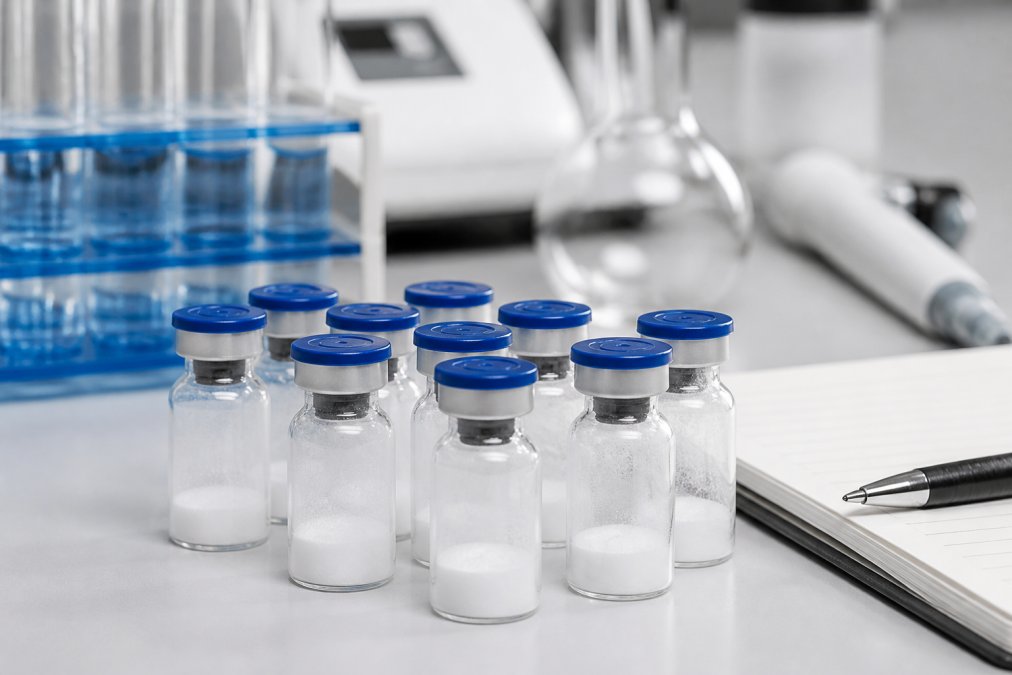
BlueWaveCompound delivers research-grade peptides with third-party lab testing on every batch. Each peptide arrives with a Certificate of Analysis documenting purity, molecular weight verification, and analytical methods used.
The core strength is consistency. BlueWaveCompound maintains high purity standards (≥99%) and provides detailed batch-specific documentation. This eliminates guesswork when troubleshooting experimental results. The money-back guarantee reflects confidence in product quality. Fast and discreet shipping protocols prevent degradation during transit, with lyophilized peptides arriving in sealed vials with desiccant packs.
Protide Health: Transparency and Independent Verification
Protide Health differentiates itself through radical transparency. Batch-specific Certificates of Analysis are publicly available before purchase. You can review actual test results from recent batches without requesting anything.
Purity averages 99.53% based on published data, exceeding the industry standard. HPLC and mass spectrometry validation is comprehensive. Fast US shipping for temperature-sensitive materials is standard, and endotoxin testing via LAL assay is included.
Phoenix Pharmaceuticals: Established ISO 9001 Certified Manufacturer
Phoenix Pharmaceuticals brings 55+ years of manufacturing experience and ISO 9001 certification. The catalog includes over 9,000 SKUs, and all production happens in-house in the USA. For institutions requiring vendor compliance documentation, Phoenix's ISO 9001 certification provides the proof needed.
Phoenix operates institutional-only, so small academic labs must work through their institution's purchasing department.
American Peptides: Fast Domestic Shipping with Bulk Options
American Peptides emphasizes speed and domestic supply chain control. Same-day shipping for orders placed by 2 PM EST means peptides leave the facility within hours.
HPLC and mass spectrometry validation is standard on every batch. Volume pricing and net terms for qualifying institutions acknowledge that research labs buy in volume. GHS-format Safety Data Sheets accompany every order.
New England Peptide Center: Advanced Verification Methods
New England Peptide Center guarantees ≥98% purity with comprehensive third-party verification. Molecular weight confirmation via mass spectrometry is standard. The quality guarantee is explicit: full replacement or refund if products don't meet specifications.
The product range includes popular research peptides and peptide blends. The combination of reasonable pricing and quality guarantee creates good value for academic researchers.
Research-Grade Peptide Procurement Best Practices
Sourcing reliable peptide sources requires a systematic approach. Start by defining your requirements: What purity threshold does your application demand? Are you running cell culture studies requiring endotoxin testing? Do you need lyophilized powder or solution-phase peptides?
Document your vendor evaluation criteria. Purity standards, analytical methods, documentation requirements, shipping protocols, and pricing all factor in. Create a scorecard so vendor comparisons are consistent and defensible to your institution's procurement team.
Vendor Vetting and Compliance Documentation
Request detailed information from prospective vendors before committing. Ask about their quality management system, ISO certifications, analytical equipment, and third-party testing partners. Compliance documentation matters significantly, your institution likely has vendor approval processes.
Reference checks provide real-world feedback. Ask vendors for contact information from similar labs. Did batches perform consistently? How responsive was customer support when issues arose?
Supply Chain Traceability and Stability Requirements
Understand your supplier's supply chain. Where do they source amino acids and reagents? What's their cold chain protocol? Peptide degradation during shipping is a real problem; vendors who invest in protective packaging, temperature-controlled shipping, and desiccant packs take stability seriously.
Ask about long-term stability data. How long does a peptide remain at ≥99% purity after synthesis? Batch-to-batch consistency matters for longitudinal studies. Request data showing purity and molecular weight across multiple recent batches from the same vendor.
Avoiding Low-Quality Peptide Suppliers
Vendors who refuse to provide batch-specific Certificates of Analysis are hiding something. If they only offer generic template CoAs or claim "all batches are the same," find another supplier.
Purity claims without analytical method documentation are suspect. Demand proof. Suspiciously low pricing often correlates with quality shortcuts. If a vendor's prices are 30-40% below competitors, ask why.
Vendors with poor customer service or slow communication are warning signs. Peptide sourcing involves technical questions about synthesis methods, purity specifications, and stability requirements. Avoid vendors operating from unverifiable locations or with no established track record.
Sourcing reliable peptide sources for laboratories is one of the most consequential decisions a research team makes. Material quality directly impacts experimental reproducibility, publication credibility, and career outcomes. BlueWaveCompound and other premium suppliers understand this weight. They invest in third-party testing, detailed documentation, and stability protocols because researchers depend on certainty. When evaluating peptide vendors, prioritize transparency and verification over price. Your experiments and reputation depend on it.
Frequently Asked Questions
How do I know if a peptide supplier is legitimate?
Verify that the supplier provides batch-specific Certificates of Analysis from third-party laboratories, maintains ISO 9001 or equivalent certifications, and offers documented quality standards. Request references from similar research institutions. Check whether they publish purity data, testing methods (HPLC, mass spectrometry), and lot numbers before purchase. Legitimate suppliers welcome transparency and can provide documentation of regulatory compliance.
What should I look for in a third-party lab testing report for peptides?
A credible third-party lab testing report includes molecular weight confirmation via mass spectrometry, purity percentage determined by HPLC, lot number and batch date, endotoxin testing results (LAL assay), and the testing laboratory's credentials. The report should specify the analytical methods used, reference standards applied, and acceptance criteria. Verify that the testing was performed by an independent laboratory, not the supplier's internal lab alone.
Why does research-grade peptide procurement require third-party verification?
Third-party lab testing eliminates supplier bias and ensures independent validation of purity, identity, and safety. This verification prevents experimental contamination, improves reproducibility, and protects research integrity. Government-funded research institutions often require third-party documentation for compliance with federal standards. Independent testing also identifies endotoxin contamination and confirms that the peptide meets the sequence and molecular weight specifications your experiments demand.
What is the difference between research-grade and pharmaceutical-grade peptides?
Research-grade peptides meet rigorous purity and documentation standards (typically ≥99%) for scientific investigation but are not manufactured under cGMP (current Good Manufacturing Practice) standards required for human or veterinary use. Pharmaceutical-grade peptides follow FDA-regulated cGMP manufacturing, additional stability testing, and regulatory filing requirements. For laboratory research, research-grade peptides with third-party testing provide the consistency and documentation needed without the cost premium of pharmaceutical-grade production.
This article was written using GrandRanker