 blog
blog
Research Peptides: Quality Review
Table of Contents
- Understanding Peptide Quality Standards
- Third-Party Lab Testing for Peptides: What It Means
- How to Read a Peptide Certificate of Analysis
- AminoVault vs CorePeptides: Direct Comparison
- GMP Compliance and ISO 17025 Accreditation
- Choosing the Right Supplier for Your Research
- Conclusion
Last Updated: August 28, 2026
Understanding Peptide Quality Standards
When selecting a peptide supplier for research, quality isn't a marketing claim, it's a measurable outcome. The difference between a high-quality peptide and a mediocre one shows up in your experimental results: reproducibility improves, noise decreases, and your confidence in the data strengthens. BlueWaveCompound has built its reputation on a straightforward principle: every batch undergoes third-party lab testing, and every researcher receives a Certificate of Analysis before their order ships. (Source: ISO/IEC 17025 accreditation)
The research community increasingly demands transparency around purity, potency, and contamination screening. This shift reflects a hard-learned lesson: inferior compounds waste time, money, and research momentum. A peptide claiming 99% purity without third-party verification is a risk. One backed by HPLC analysis and mass spectrometry data is a foundation you can build on.
Third-Party Lab Testing for Peptides: What It Means
Third-party lab testing is the process of sending peptide samples to an independent analytical laboratory, one with no financial stake in the supplier's business, to verify purity, potency, and the absence of harmful contaminants. This separation creates accountability. The testing lab has no incentive to inflate purity claims or overlook impurities.
When a peptide supplier conducts in-house testing only, conflicts of interest emerge. The lab profits from the parent company's sales, which can create subtle pressure to deliver favorable results. Independent testing removes that pressure entirely.

HPLC and Mass Spectrometry Analysis
High-Performance Liquid Chromatography (HPLC) separates peptide components by size and chemical properties, then measures their concentration. It answers a critical question: how much of the sample is actually the peptide you ordered, and how much is impurities or degradation products?
Mass spectrometry identifies the molecular weight of the peptide with extreme precision. It confirms that the compound matches the expected structure. Together, HPLC and mass spectrometry provide complementary data: HPLC shows purity percentage, while mass spectrometry confirms identity.
Most research-grade peptides require both methods. HPLC alone can't confirm molecular identity, a contaminant might have similar size and properties. Mass spectrometry alone doesn't measure purity, it identifies what's present but not in what proportion. The combination is what separates rigorous testing from incomplete analysis.
Contaminant and Heavy Metal Screening
Beyond purity, peptides must be screened for contaminants that could skew your results or introduce safety concerns. Common contaminants include residual solvents from synthesis, endotoxins from bacterial contamination, and heavy metals from reagents used during manufacturing.
Endotoxin testing is particularly important for any peptide that might contact biological systems. Endotoxins trigger immune responses in cell cultures and animal models, producing false positives or inflated responses that obscure your actual experimental findings.
Heavy metal screening, typically measuring lead, cadmium, mercury, and arsenic, ensures that manufacturing processes didn't introduce toxic elements. A peptide that's 99% pure but contains trace heavy metals can still compromise research integrity.
How to Read a Peptide Certificate of Analysis
A Certificate of Analysis (COA) is your proof of quality. It's a technical document issued by the testing laboratory, not the supplier, and it contains the raw data from analytical testing. Learning to read a COA transforms it from an intimidating document into a powerful verification tool.
Key Data Points in a COA
The most critical section of a COA is the purity statement, typically expressed as a percentage by HPLC. A legitimate COA will state something like "Purity: 99.2% (HPLC, 214 nm)" or similar. The wavelength notation (214 nm, 220 nm, 280 nm) indicates which UV absorption the lab measured, different peptides absorb light at different wavelengths.
The molecular weight verification section confirms the peptide's identity via mass spectrometry. You'll see an "observed molecular weight" compared to the "theoretical molecular weight." These should match within a narrow margin, typically within 0.1% for peptides under 5 kDa.
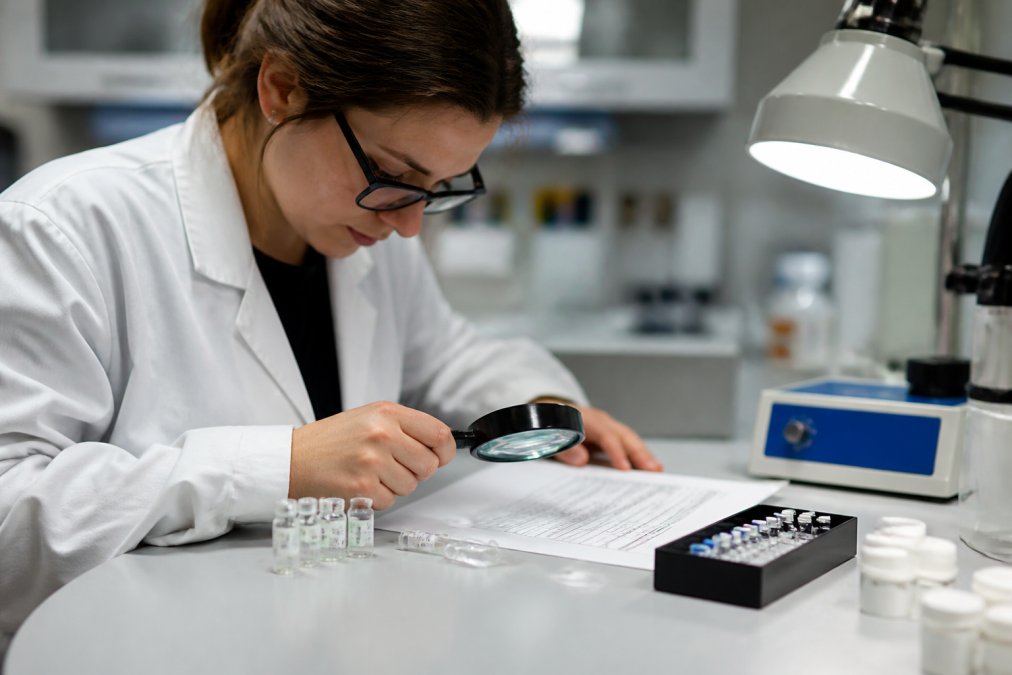
Batch-specific identifiers appear near the top: lot number, synthesis date, and testing date. These link the COA to your specific order. A COA without clear batch identification isn't useful, you can't confirm it matches what you received.
The testing facility credentials should be visible on the document. Look for ISO 17025 accreditation, which certifies that the lab meets international standards for analytical testing. If the lab isn't ISO 17025 accredited, the data carries less weight in the scientific community.
Verifying Batch Consistency Across Orders
When you reorder the same peptide, request a COA for the new batch. Don't assume consistency. Peptide synthesis is a chemical process, and slight variations in conditions can affect the final product. A supplier committed to batch consistency will provide COAs that show purity within a tight range, typically 98-100%, not 95-100%.
Compare the purity percentages across batches. If one batch is 99.5% pure and the next is 97.2%, that's a significant swing. It doesn't mean the peptide is bad, but it means your experimental conditions should account for the variation. Consistent batches, all clustering around 99% purity, are easier to work with and reduce experimental noise.
The synthesis and testing dates matter too. A peptide synthesized six months ago and tested last month tells a different story than one synthesized and tested within days. Long storage periods, even under ideal conditions, can affect stability and purity.
AminoVault vs CorePeptides: Direct Comparison
Both AminoVault and CorePeptides operate in the research peptide space, and both claim high-purity compounds. However, the specifics of how they verify quality, support shipping stability, and document their processes differ meaningfully.
Testing and Certification Protocols
AminoVault provides third-party lab testing for their peptides and supplies Certificates of Analysis. Their testing includes HPLC purity analysis and mass spectrometry confirmation. The testing appears to be conducted by external laboratories, though their documentation of which specific lab performs the testing and whether that lab holds ISO 17025 accreditation requires direct inquiry.
CorePeptides similarly offers third-party testing and COA documentation. Their approach includes HPLC analysis and mass spectrometry. Like AminoVault, the specifics of their testing facility credentials and ISO 17025 status are not prominently featured in their standard documentation.
The practical difference: both suppliers provide third-party verification, which is essential. However, neither prominently advertises the accreditation status of their testing labs. For researchers at institutions requiring ISO 17025-accredited testing, this detail becomes critical and may require contacting the supplier directly. (Source: principles of mass spectrometry)
Shipping Stability and Storage Support
AminoVault emphasizes discrete shipping and indicates attention to peptide stability during transport. Their documentation mentions temperature control considerations, though specific details about cold-chain protocols, packaging materials, or reconstitution guidance are not immediately transparent in their standard product information.
CorePeptides similarly highlights shipping considerations and mentions stability protocols. Their documentation suggests attention to storage conditions and handling, but like AminoVault, the granular details about reconstitution protocols, long-term stability data, or specific storage temperature ranges require deeper investigation.
BlueWaveCompound differentiates itself by providing explicit guidance on reconstitution and storage alongside fast, discreet shipping. The emphasis on stability documentation, not just claiming it, but providing the data, reflects a commitment to helping researchers understand how to maintain peptide integrity throughout the research lifecycle.
Customer Service and Documentation
AminoVault provides customer support, though response times and the depth of technical documentation available to customers before purchase aren't widely advertised.
CorePeptides offers customer support with a similar structure. Like AminoVault, the accessibility of detailed technical guidance and the responsiveness to pre-purchase inquiries varies.
BlueWaveCompounds positions customer service as a core differentiator, emphasizing professional support for researchers navigating documentation, storage protocols, and troubleshooting. The money-back guarantee reflects confidence in product quality and a willingness to stand behind claims with concrete accountability.
Supplier | Third-Party Testing | ISO 17025 Transparency | Reconstitution Guidance | Storage Documentation | Discreet Shipping |
|---|---|---|---|---|---|
AminoVault | Yes | Limited detail | Available | Available | Yes |
CorePeptides | Yes | Limited detail | Available | Available | Yes |
BlueWaveCompounds | Yes | Emphasized | Comprehensive | Detailed | Yes |
GMP Compliance and ISO 17025 Accreditation
GMP (Good Manufacturing Practice) compliance and ISO 17025 accreditation are two separate but complementary standards that matter for peptide quality.
GMP compliance governs how peptides are manufactured. It ensures that synthesis procedures, equipment maintenance, personnel training, and documentation meet consistent standards. A GMP-compliant facility maintains detailed records of every batch, including raw materials, synthesis conditions, and quality checks. If something goes wrong, GMP documentation allows traceability.
ISO 17025 accreditation applies to testing laboratories, not manufacturers. It certifies that the lab's analytical procedures, equipment calibration, staff competence, and quality assurance meet international standards. An ISO 17025-accredited lab has undergone third-party assessment and must maintain those standards through regular audits.
A peptide can be synthesized at a non-GMP facility but tested at an ISO 17025-accredited lab, and that testing still carries significant weight. Conversely, a GMP-compliant manufacturer whose testing is conducted at a non-accredited lab leaves a gap in verification.
The ideal scenario is both: GMP-compliant manufacturing plus ISO 17025-accredited testing. This combination provides confidence at every stage. When evaluating suppliers, ask specifically about both credentials. If a supplier emphasizes one but not the other, that's a signal to dig deeper.
Choosing the Right Supplier for Your Research
Selecting a peptide supplier isn't just about purity percentage or price. It's about building a relationship with someone who understands your research needs, provides transparent documentation, and backs their claims with verifiable data.
Start by defining your non-negotiable requirements. If your institution requires ISO 17025-accredited testing, that's a hard filter. If you're running in vivo studies, contaminant screening becomes critical. If you're doing long-term stability studies, you need a supplier who can provide aged samples or stability data.
Request COAs before placing your first order. A supplier who hesitates to provide testing data before purchase is signaling that verification isn't a priority for them. Legitimate suppliers understand that researchers need to verify quality before committing.
Evaluating Long-Term Stability Data
Long-term stability data tells you how a peptide performs over months or years under specified storage conditions. A peptide that's 99% pure on day one but degrades to 85% purity after six months of storage creates problems downstream. Your experimental results from month one won't replicate in month six without accounting for that degradation.
Ask suppliers for stability data at the conditions you'll actually use: room temperature, 4°C, or -20°C. A supplier who has tested stability at these temperatures and documented the results demonstrates rigor. If they haven't, that's a gap in their documentation, and potentially a risk in your research.
BlueWaveCompound's emphasis on stability documentation reflects an understanding that purity at synthesis is only part of the story. What matters is purity when you use the peptide, which depends on how well it was handled, shipped, and stored.
Reconstitution Protocols and Storage Guidance
A Certificate of Analysis tells you what the peptide was when tested. Reconstitution protocols tell you how to maintain that quality after you receive it. Specific guidance, pH ranges for reconstitution, recommended solvents, buffer compositions, storage temperatures, prevents avoidable degradation.
Some peptides are lyophilized (freeze-dried) and require reconstitution in specific solvents. Others come in solution. The reconstitution method matters. Reconstituting in the wrong pH buffer or at the wrong temperature can degrade the peptide before you even use it in your experiments.
Request detailed storage guidance from your supplier. "Store at -20°C" is a start, but "Store in amber vials at -20°C, avoid repeated freeze-thaw cycles, and reconstitute in phosphate-buffered saline at pH 7.4" is actionable. The more specific the guidance, the better your chances of maintaining peptide integrity throughout your research.
Choosing between peptide suppliers ultimately comes down to transparency and accountability. Both AminoVault and CorePeptides provide third-party testing and documentation, which puts them ahead of suppliers offering no verification. However, the depth of their documentation, the clarity of their testing lab credentials, and the specificity of their guidance on stability and reconstitution vary.
BlueWaveCompound differentiates through comprehensive documentation of testing protocols, transparent communication about storage and reconstitution, and a commitment to supporting researchers beyond the initial sale. For institutions and research teams that prioritize verification and long-term stability, BlueWaveCompound's approach to quality documentation and customer support makes it the stronger choice. Start by requesting detailed COAs and stability data from any supplier you're considering, the quality of their response will tell you everything you need to know about their commitment to research integrity.
Frequently Asked Questions
How do I verify that a peptide quality review is based on real third-party lab testing?
Check whether the supplier provides a Certificate of Analysis (COA) with each batch, showing results from an independent laboratory. The COA should list the testing methods used (HPLC, mass spectrometry, endotoxin screening), the lab's accreditation status (ISO 17025 is a strong indicator), batch number, purity percentage, and the date tested. Reputable peptide quality review comparisons will highlight whether suppliers make their COAs publicly available before purchase and whether they're willing to share analytical reports with qualified researchers.
What peptide purity standards should I expect from research-grade suppliers?
High-purity research-grade peptides typically meet or exceed 99% purity as confirmed by HPLC analysis. Peptide purity standards are determined by the intended application and the sensitivity of your assays. For most biochemical research, ≥99% purity ensures minimal interference from impurities. Reputable suppliers provide documented purity data on every batch and can explain how purity was measured. Some applications require even higher standards; your supplier should help you determine the appropriate threshold and verify batch consistency over time.
How does batch-to-batch consistency affect my experimental reproducibility?
Inconsistent batches introduce uncontrolled variables that increase experimental noise and make results harder to replicate. When peptide purity, molecular weight, or solubility varies between orders, your assays may produce different outcomes even when your protocol remains unchanged. Reliable suppliers maintain strict quality control and provide COAs showing that each batch meets the same specifications. Checking historical COA data from your supplier helps verify batch consistency before committing to large orders for long-term studies.
What should I ask a peptide supplier about their reconstitution and storage protocols?
Request detailed written guidance on optimal storage temperature, buffer recommendations for reconstitution, and expected shelf life under specified conditions. Ask whether the supplier uses lyophilized powder (which typically offers better long-term stability) and what data they have on degradation rates over time. Inquire about cold-chain shipping practices and whether they provide tracking or temperature monitoring during transit. A supplier confident in their product will provide stability data and be transparent about factors that affect peptide integrity during storage and reconstitution.
This article was written using GrandRanker