 ultimate-guide
Why Research Peptides Fail Experiments: 7 Critical Issues
Table of Contents
- Why Research Peptides Fail: The Core Problem
- Endotoxin and Impurity Contamination
- Peptide Storage and Stability Best Practices
- Receptor Adaptation and Desensitization Effects
- Ensure Batch to Batch Reproducibility
- Troubleshooting Peptide Assays
- Quality Control and Purity Testing Standards
- Conclusion
Last Updated: August 30, 2026
Why Research Peptides Fail: The Core Problem
Research peptides fail experiments more often than most scientists expect. When a carefully designed study produces inconsistent results or no signal at all, the culprit is rarely the experimental design itself. Instead, the problem usually traces back to the peptide: its purity, stability, handling, or how it was stored before it ever reached your lab.
This matters because a single failed experiment can delay your research timeline by months. You'll restart from scratch, revalidate protocols, and lose confidence in your materials. At BlueWaveCompound, we understand why research peptides fail experiments across various labs. The patterns are consistent, and most are preventable.
The seven critical issues we cover below account for the vast majority of experimental failures. Some stem from contamination during synthesis or storage. Others emerge from how peptides degrade under stress. Still others result from how researchers handle and reconstitute them. Understanding each one transforms your troubleshooting from guesswork into systematic problem-solving.
Endotoxin and Impurity Contamination
Endotoxin contamination is one of the most insidious reasons research peptides fail experiments. Endotoxins are lipopolysaccharides derived from gram-negative bacterial cell walls (peer-reviewed research). They're pyrogenic, meaning they trigger immune responses even at nanomolar concentrations (the FDA). A peptide that looks pure on paper can still harbor endotoxins that completely obscure your biological signal.
The danger lies in invisibility. Endotoxins don't change a peptide's mass or chemical identity. They won't show up in basic purity assays. But when you add your peptide to cells or tissue, endotoxins activate toll-like receptors and inflammatory pathways. Your cells respond to the endotoxin, not your peptide. Your experiment fails, and you blame the wrong variable.
Contamination also occurs from other impurities introduced during synthesis. Residual trifluoroacetic acid, counter-ions, or incomplete deprotection can interfere with receptor binding or assay readouts. A peptide at 99% purity still contains 1% of something, and that something matters if it's a potent inflammatory agent or a competing ligand.
The solution starts with your supplier. Demand documentation: a Certificate of Analysis that includes endotoxin testing (usually by LAL, Limulus Amebocyte Lysate assay). Third-party lab testing provides the verification you need. BlueWaveCompound peptides are tested for endotoxin levels and purity by independent laboratories, with results provided before shipment. This removes guesswork from your material assessment.
Peptide Storage and Stability Best Practices
How you store peptides determines whether they remain active or degrade into useless fragments. Most research peptides are supplied as lyophilized powders precisely because this form maximizes shelf life. But once reconstituted, peptides become vulnerable to multiple degradation pathways.
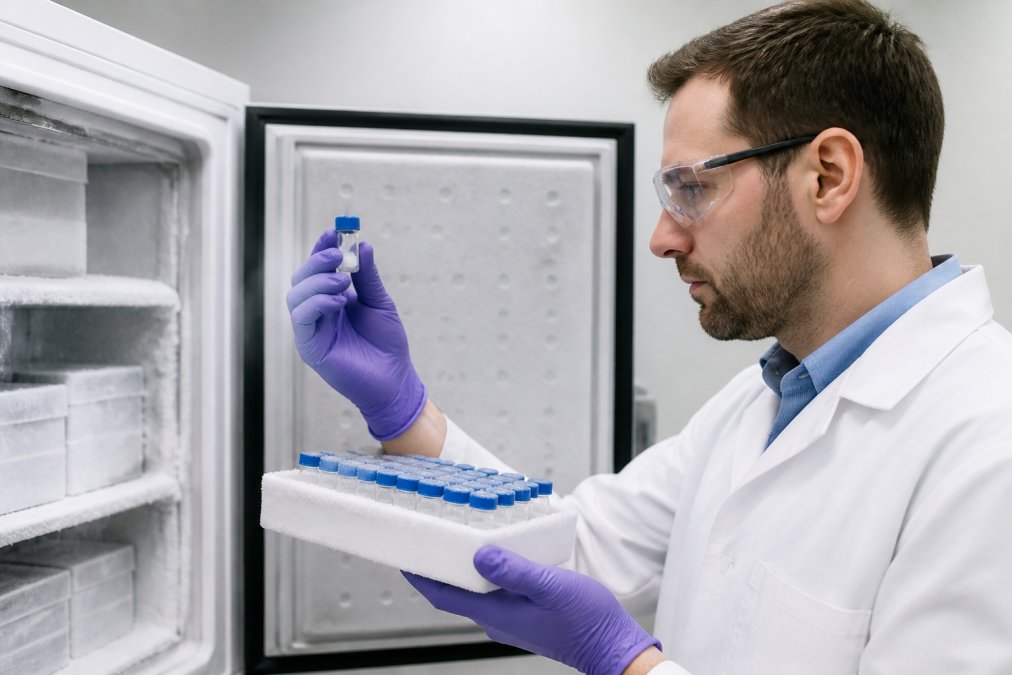
Temperature is the primary enemy. Store lyophilized peptides at -20°C or colder. Room temperature storage accelerates hydrolysis and oxidation. Even brief exposure to warmth, during shipping or handling, can initiate degradation. Once reconstituted, most peptides should be stored at -80°C if you're not using them immediately, or at 4°C for short-term use (typically under one week).
Oxidation and reduction sensitivity requires special attention. Peptides containing cysteine residues form disulfide bonds, which can misdirect or aggregate if exposed to oxidizing conditions. Tryptophan residues are similarly vulnerable to photodegradation and oxidative cleavage. Store peptides in amber vials or opaque containers to block light. Consider adding reducing agents like DTT or TCEP if your peptide contains sensitive residues, but verify compatibility with your downstream assay first.
Humidity matters too. Lyophilized peptides are hygroscopic, they absorb moisture from air. Store them in a desiccator with desiccant packets, or use vacuum-sealed vials. Moisture promotes hydrolysis and bacterial growth. If your peptide arrives in a vial without desiccant, transfer it to a sealed container with fresh desiccant immediately.
Oxidation and Reduction Sensitivity
Oxidation is a silent killer in peptide experiments. A peptide containing methionine or cysteine can oxidize during storage, shipping, or reconstitution. Oxidized methionine changes the peptide's mass and often eliminates biological activity. Oxidized cysteines form incorrect disulfide bonds, creating misfolded aggregates that won't bind receptors.
Prevention requires three steps: store under nitrogen or argon to exclude oxygen, use amber vials to block light, and add antioxidants if appropriate. Ascorbic acid, sodium sulfite, or methionine itself can protect sensitive peptides. Again, verify that your antioxidant won't interfere with your assay before adding it.
Lyophilization and Reconstitution Best Practices
Lyophilization preserves peptides by removing water under vacuum while frozen. The process is gentle if executed properly, but poor lyophilization introduces damage. Peptides lyophilized too quickly or at temperatures above -40°C can denature. Residual moisture left after lyophilization accelerates degradation.
When you receive a lyophilized peptide, inspect the cake. It should be a light, fluffy powder or cake, not a hard, glassy mass or a wet paste. A glassy appearance suggests the lyophilization temperature was too high. A wet appearance indicates incomplete drying.
Reconstitution technique determines whether you recover full activity. Add your solvent slowly, allowing the lyophilized cake to gradually hydrate. Vigorous mixing or sonication can introduce air bubbles and foam, which oxidize the peptide. Let the peptide dissolve passively for 10-15 minutes before gentle pipetting. For hydrophobic peptides, warm the solvent to 37°C before adding the peptide, this accelerates dissolution without damaging the molecule.
Receptor Adaptation and Desensitization Effects
Even a perfectly pure, stable peptide can fail if your experimental system exhibits receptor adaptation. This occurs when cells exposed to your peptide for prolonged periods downregulate their receptors or desensitize their signaling pathways. The peptide itself is fine; the biological system stops responding.
This phenomenon, called tachyphylaxis or receptor downregulation, is common in GPCR signaling studies. Cells exposed to agonists rapidly phosphorylate and internalize receptors. A second exposure to the same peptide produces a weaker response. Your dose-response curve flattens, or you see no signal at all on day two.
The fix depends on your experimental design. If you're measuring acute responses, use fresh cells for each treatment. If you're studying chronic effects, account for receptor downregulation in your interpretation. Pre-treat cells with phosphatase inhibitors to slow receptor internalization, or use antagonists to block desensitization mechanisms. Document your approach in your methods, this prevents misinterpreting a biological phenomenon as a material failure.
Ensure Batch to Batch Reproducibility
Batch-to-batch variability is a hidden source of experimental failure. Two vials of the same peptide from different synthesis batches may have slightly different purity, counter-ion composition, or residual solvent content. These differences are often small enough to pass quality control, but large enough to shift your experimental readout.
This is why batch-to-batch reproducibility matters. When you identify a peptide that works, document the batch number. Request the same batch for follow-up experiments if possible. If you must switch batches, run a side-by-side comparison before committing to the new batch for critical experiments.
BlueWaveCompound maintains strict batch consistency through documented synthesis protocols and third-party testing. Each batch receives independent lab verification before shipment, ensuring that batch N performs like batch N-1. This reproducibility is essential for multi-year research programs where you may order the same peptide dozens of times.
Troubleshooting Peptide Assays
When your peptide-based assay fails, the problem could be the peptide, the assay itself, or an interaction between them. Systematic troubleshooting narrows it down.
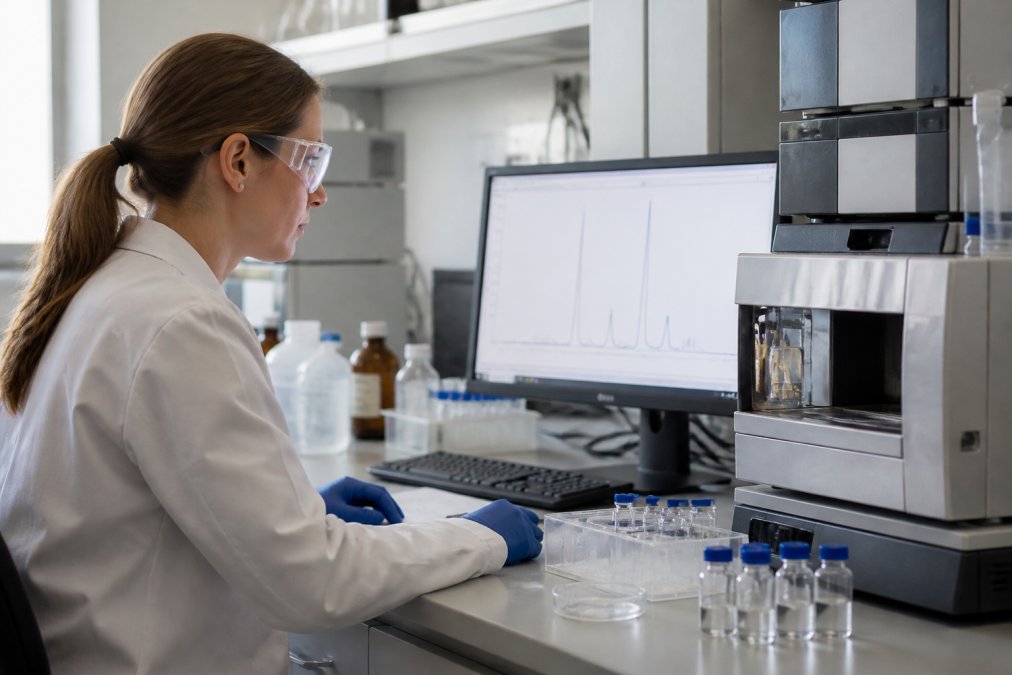
Start by confirming peptide identity and purity. Request a mass spectrometry result from your supplier's Certificate of Analysis. Does the observed mass match the theoretical mass? If not, the peptide may be incomplete or incorrectly synthesized. Does the purity percentage align with your expectations? A peptide that arrived at 95% purity instead of 99% may contain interfering impurities.
Next, verify your reconstitution. Prepare a fresh aliquot from the original vial. Run it through your assay in parallel with your current working stock. If the fresh aliquot works and your stock doesn't, degradation during storage is the culprit. If both fail identically, the problem lies elsewhere.
Test your assay controls independently. Run your positive control without the peptide. Run your negative control with the peptide. If the positive control fails, your assay system is broken, not your peptide. If the negative control shows signal, your peptide is interfering with the assay itself (perhaps by precipitating, binding nonspecifically, or activating off-target pathways).
Common Assay Failure Modes
Precipitation: Peptides with high hydrophobicity or net charge can precipitate in aqueous buffers. They appear to have lost activity, but they're simply aggregated. Add detergents (0.1% Triton X-100 or Tween-20) or organic co-solvents (5-20% DMSO or ethanol) to solubilize them. Verify that these additives don't interfere with your assay readout.
Nonspecific binding: Some peptides stick to plastic wells, glass, or filter membranes. Coat surfaces with BSA or casein before adding your peptide. Use low-protein-binding plasticware if available. This is especially common in high-throughput screening assays where peptide concentration is low.
Assay interference: Your peptide may contain residual synthesis reagents that interfere with your assay chemistry. Trifluoroacetic acid can lower pH and shift equilibria. Incompletely removed protecting groups can react with assay components. Request a detailed synthetic procedure and residual solvent analysis from your supplier.
Buffer incompatibility: The buffer in which your peptide is supplied may not match your assay buffer. When you dilute the peptide into your assay medium, pH or ionic strength changes can cause precipitation or conformational shifts. Dialyze or desalt your peptide into your assay buffer before use.
Certificate of Analysis Interpretation
A Certificate of Analysis is your window into peptide quality. Learn to read it correctly.
The purity percentage (usually reported as % by HPLC) tells you what fraction of the material is your intended peptide. 99% purity means 1% is something else, likely related impurities from incomplete synthesis. For most research applications, 95-99% purity is acceptable. Below 95%, impurities may significantly interfere.
Mass spectrometry results confirm molecular weight. The observed mass should match the theoretical mass within ±1 Da for peptides under 5 kDa. If the observed mass is significantly higher, the peptide may retain water, counter-ions, or protecting groups. If it's lower, the peptide may be truncated or missing a residue.
Endotoxin levels are reported in endotoxin units per milligram (EU/mg) or LAL units. For cell-based assays, keep endotoxin below 0.1 EU/mg (the FDA). For in vivo work, lower is better, ideally below 0.01 EU/mg. If your Certificate doesn't report endotoxin testing, request it. This is non-negotiable for experiments involving cells or animals.
Water content (Karl Fischer titration) indicates residual moisture. Below 5% is typical for lyophilized peptides. Above 10% suggests incomplete lyophilization or moisture absorption during storage.
Quality Control and Purity Testing Standards
Industry standards for peptide purity are defined by several bodies. The United States Pharmacopeia (USP) and European Pharmacopoeia (EP) establish monographs for pharmaceutical peptides. For research peptides, the American Chemical Society (ACS) provides guidance on chemical purity.
High-performance liquid chromatography (HPLC) is the gold standard for purity assessment. Reverse-phase HPLC separates peptide components by hydrophobicity, allowing quantification of the target peptide and related impurities. A well-resolved HPLC chromatogram with a single major peak (>95% area under the curve) indicates high purity.
Mass spectrometry confirms identity. Matrix-assisted laser desorption/ionization (MALDI) or electrospray ionization (ESI) mass spectrometry measures the exact molecular weight. This rules out truncated or modified peptides that might have similar HPLC retention times.
Amino acid analysis provides an independent check. The peptide is hydrolyzed into constituent amino acids, which are quantified. The amino acid composition should match the expected sequence. This catches synthesis errors that HPLC or mass spectrometry might miss.
For research peptides, third-party testing adds credibility. An independent laboratory verifies purity, identity, and endotoxin levels. This removes conflicts of interest and provides documentation for regulatory submissions or publication. BlueWaveCompound uses third-party laboratories for all quality testing, providing you with verified results before your peptide ships.
Research peptides fail experiments when purity, stability, or handling falls short of your assay's demands. The good news: nearly all failures are preventable. Demand a Certificate of Analysis. Verify endotoxin testing. Store properly. Reconstitute carefully. Troubleshoot systematically.
When you partner with a supplier committed to quality, one that invests in third-party testing, documents batch consistency, and stands behind every peptide, experimental failures drop dramatically. BlueWaveCompound delivers research-grade peptides tested by independent laboratories and backed by detailed Certificates of Analysis. Get started with BlueWaveCompound and eliminate material uncertainty from your research.
=== FAQ ANSWERS (audit these too, same rules) ===
Frequently Asked Questions
Q: What are the most common reasons why research peptides fail experiments?
A: Research peptides fail primarily due to contamination, improper storage, degradation during handling, and batch inconsistency. Endotoxin and lipopolysaccharide contamination can trigger immune responses that confound results. Oxidation of sensitive amino acids like cysteine and tryptophan degrades peptide structure. Poor storage temperature control causes hydrolysis and aggregation. Batch-to-batch variability in purity or amino acid sequence creates irreproducible results. Third-party lab testing and Certificates of Analysis help verify quality before experiments begin.
Q: How does peptide purity affect experimental reproducibility?
A: Purity directly determines whether your experimental results are reproducible. Low-purity peptides contain degradation products, synthesis byproducts, and counter-ions that interfere with receptor binding, cell signaling, and assay readouts. A peptide at 95% purity contains 5% unknown compounds that may act as antagonists or agonists, masking the true biological activity of your target compound. High-purity peptides (≥99%) ensure dose accuracy and consistent pharmacodynamic responses across batches. This consistency is essential for peer-reviewed publications and regulatory compliance.
Q: How can I verify the quality of my peptide compounds before running experiments?
A: Request a Certificate of Analysis (COA) from your supplier before accepting delivery. The COA should document purity via high-performance liquid chromatography (HPLC), molecular weight via mass spectrometry, and endotoxin levels via LAL testing. Verify that identity testing confirms the correct amino acid sequence. Check that storage recommendations specify temperature and buffer conditions. Review batch consistency data if you've ordered from the same supplier previously. Third-party lab testing provides independent verification that the peptide meets specifications, reducing experimental noise and improving confidence in your results.
Q: What should I do if my peptide assay fails despite using high-purity material?
A: First, confirm reconstitution was correct: use sterile, endotoxin-free water or buffer at the recommended pH and ionic strength. Check storage conditions, peptides stored above recommended temperatures degrade rapidly. Verify that your assay protocol matches the peptide's pharmacokinetics and pharmacodynamics; some peptides require specific pH or buffer compatibility. Test for receptor downregulation or tachyphylaxis if using the same cells repeatedly. Run a positive control with a known-good peptide batch to isolate whether the problem is the peptide or your assay method. If failure persists, contact your supplier with your COA and assay protocol for technical support.
This article was written using GrandRanker