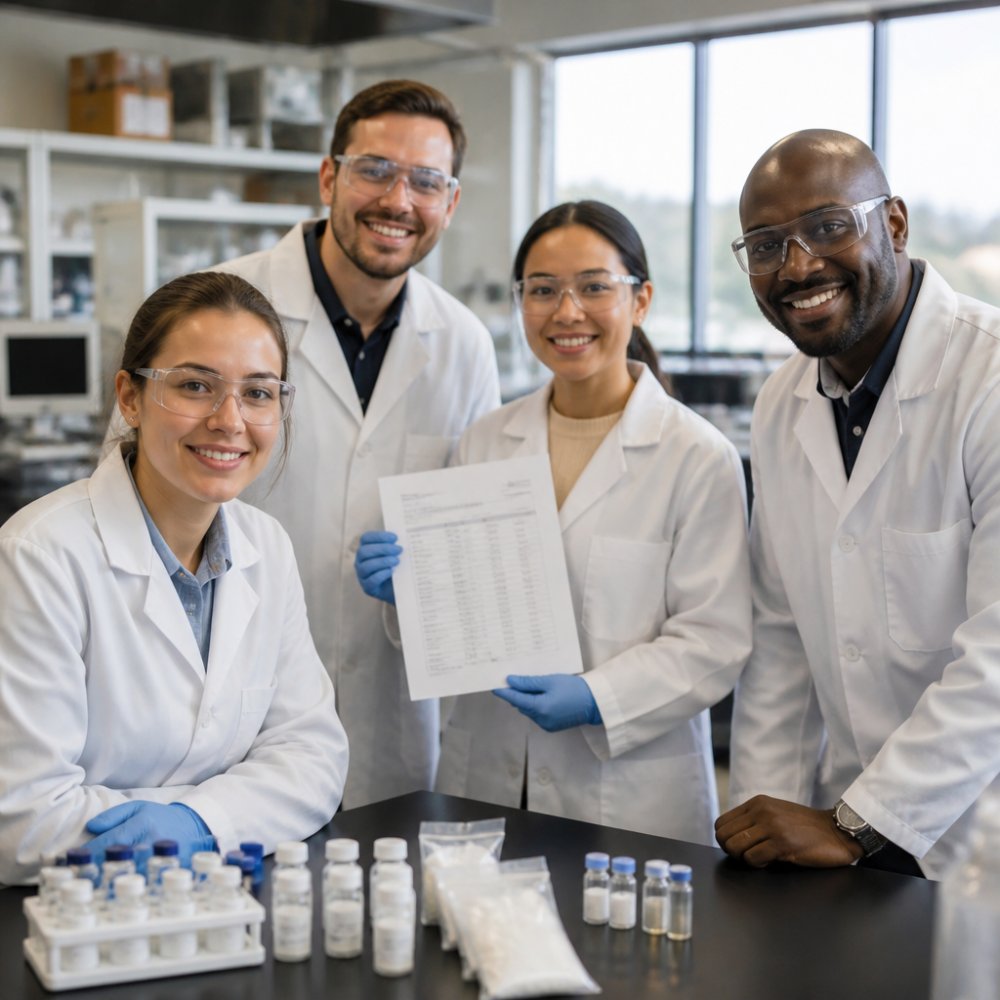
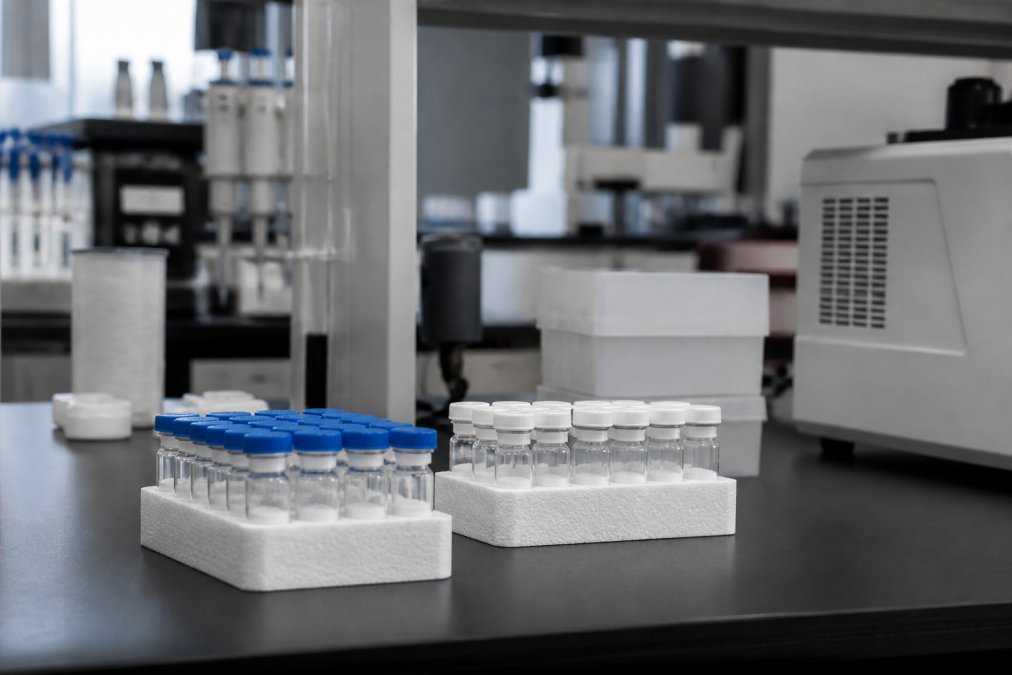
 comparison
Best American Peptides Alternatives for Research Labs
Table of Contents
- Why Researchers Switch From American Peptides to Alternatives
- How to Read a Peptide Certificate of Analysis
- Peptide Purity Standards 2026: What Your Lab Needs to Know
- Third-Party Lab Testing for Peptides: Verification That Matters
- Top American Peptides Alternatives Compared
- Evaluation Criteria: What Separates Quality Suppliers
- Common Mistakes When Switching Peptide Suppliers
- Conclusion
Last Updated: August 23, 2026
Why Researchers Switch From American Peptides to Alternatives
Researchers switch suppliers for specific reasons: better documentation, transparent third-party testing, faster shipping logistics, and suppliers who respond to questions about Certificate of Analysis authenticity. These directly affect experimental reproducibility, the foundation of publishable science.
The best American Peptides alternatives address a real problem in the peptide supply chain: verification. A Certificate of Analysis is only as credible as the lab that issued it. Researchers increasingly want to see actual test data, understand testing methodology, and know whether the COA came from an independent third-party laboratory or an in-house operation.
BlueWaveCompound represents this new standard. Every batch is third-party lab tested with a Certificate of Analysis provided as standard documentation. The focus on stability and discreet shipping addresses peptide degradation during transit, which silently corrupts experimental results without obvious warning signs.
How to Read a Peptide Certificate of Analysis
A Certificate of Analysis is only useful if you can interpret what it tells you. Many researchers receive a COA and assume the numbers mean the product is pure, without understanding what those numbers represent or whether the testing method was appropriate for the compound.
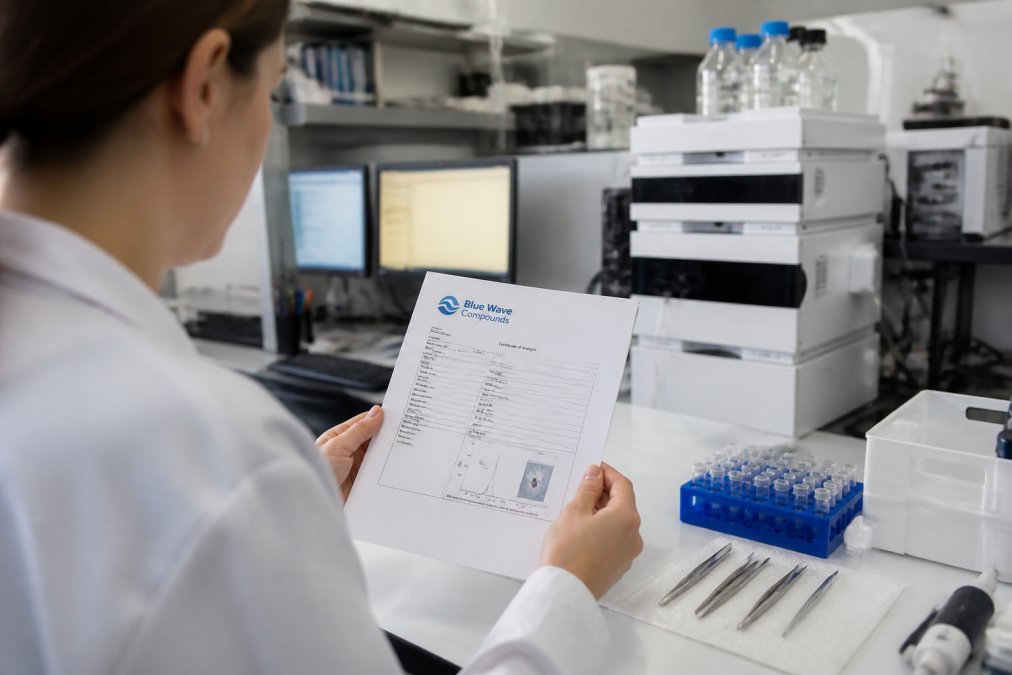
The COA should identify three critical elements: the compound name (including CAS number and alternative names), the testing methodology used, and the purity percentage reported. High-Performance Liquid Chromatography (HPLC) and Mass Spectrometry (MS) are standard methods for peptide analysis (peer-reviewed research). If a COA lists only "purity" without specifying the method, that's a red flag.
Look for the testing laboratory's name and whether it's independent from the supplier. A third-party lab carries more weight than supplier-run testing. The COA should also include the batch number, date of analysis, and expiration date of testing validity. Ask your supplier for the actual chromatogram or mass spectrum, not just the summary number. Raw data reveals whether there are unknown peaks and whether the analysis was performed properly.
Peptide Purity Standards 2026: What Your Lab Needs to Know
Most academic and biotech research labs now expect peptide purity standards of 99% or higher, verified by third-party testing (peer-reviewed research). Purity directly affects experimental noise. A peptide sample at 95% purity contains 5% unknown material, introducing variability that can obscure real biological effects (peer-reviewed research).
The testing methodology matters as much as the purity number itself. HPLC alone measures the dominant peak but doesn't confirm molecular weight or detect heavy metal contamination. Mass Spectrometry confirms exact molecular weight and rules out structural isomers. A complete peptide purity standard includes both HPLC and MS data, plus endotoxin testing if the peptide will contact cells or organisms.
Stability is a component of purity that many researchers overlook. Lyophilized peptides (freeze-dried powder) are more stable than liquid solutions, but even lyophilized material degrades if exposed to moisture, heat, or light. Your supplier should provide storage guidance and stability data showing how purity changes over time under standard storage conditions.
Third-Party Lab Testing for Peptides: Verification That Matters
Third-party lab testing transforms a supplier's purity claim from a promise into a verifiable fact. When an independent laboratory analyzes a peptide batch and issues a Certificate of Analysis, that document carries weight in peer review and regulatory contexts.
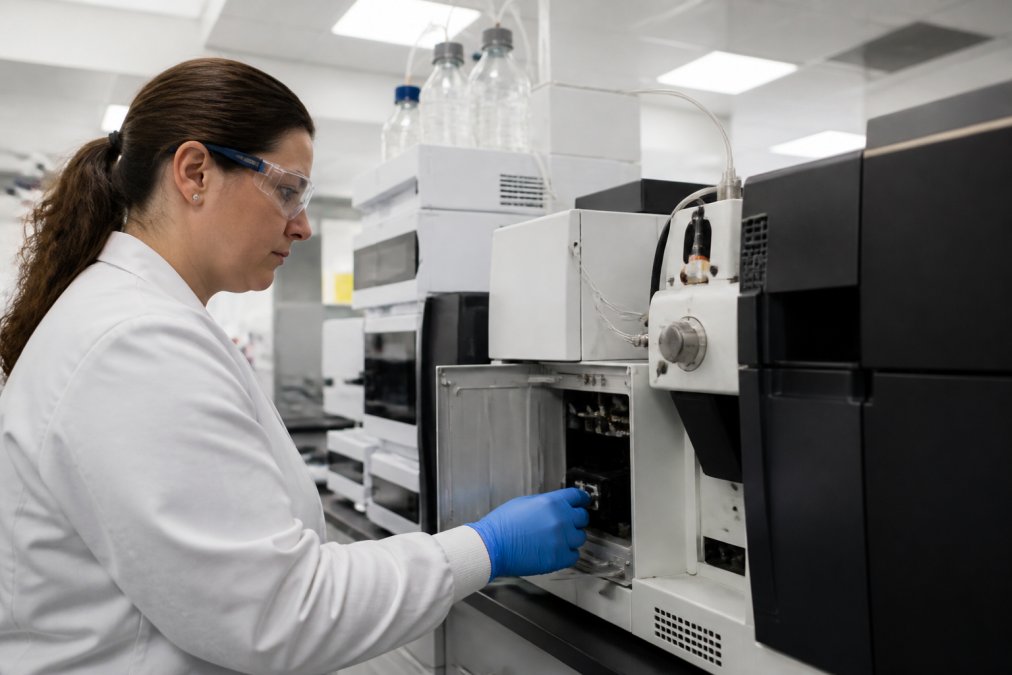
The testing should include High-Performance Liquid Chromatography to measure purity by peak area, Mass Spectrometry to confirm molecular weight, and endotoxin testing if the peptide will be used in cell-based assays. Batch testing, analyzing each batch individually rather than testing a single lot and assuming all future batches match, is the standard that separates quality suppliers from those cutting corners.
Ask your supplier which laboratory performed the analysis and request the lab's contact information. A legitimate third-party lab will have its own website, certifications (like ISO 17025 accreditation), and a reputation in the analytical chemistry community. The lag time between batch production and COA issuance matters, rapid testing within days of production gives you data that reflects the actual product you'll receive.
Cold chain management during shipping preserves the integrity of third-party testing. The best suppliers use insulated packaging, temperature monitoring, and expedited shipping to maintain the conditions documented in the COA.
Top American Peptides Alternatives Compared
BlueWaveCompound: Third-Party Tested Stability Focus
BlueWaveCompound leads this comparison because it addresses the core problem researchers face: verification and stability. Every batch undergoes third-party lab testing with a Certificate of Analysis provided as standard. The focus on stability through lyophilized formulation, proper storage guidance, and discreet shipping protocols directly reduces experimental noise that degrades reproducibility.
The brand's commitment to documentation means you get not just a purity number but the actual testing data supporting it. For labs working with NIH-funded research or preparing for publication, this level of transparency is increasingly expected. The money-back guarantee reflects confidence in batch quality and reduces the risk of switching suppliers.
Best for: Principal investigators at academic institutions, biotech research labs requiring publication-grade documentation, government-funded research programs with strict vendor compliance requirements.
Pros:
- Third-party lab tested with COA provided for every batch
- High purity (≥99%) with full analytical documentation
- Enhanced stability through lyophilized formulation and proper packaging
- Fast and discreet shipping to maintain cold chain integrity
- Money-back guarantee reduces switching risk
Limitless Biotech: USA Manufacturing and GMP Standards
Limitless Biotech operates USA-based manufacturing facilities that adhere to Good Manufacturing Practices (GMP) standards. This means documented standard operating procedures, batch tracking, and quality controls at every production step. For labs that need to audit their supplier's manufacturing practices, GMP certification provides that assurance.
The company provides third-party verified test results with HPLC and LC-MS confirmation (>99% purity). Same-day dispatch on qualifying orders and fast USA shipping appeal to labs needing quick turnaround.
Best for: Research labs prioritizing USA manufacturing compliance, labs with audit requirements for supplier documentation, facilities needing rapid peptide replenishment.
Pros:
- USA-based GMP-certified manufacturing ensures documented quality controls
- Third-party HPLC and LC-MS testing with >99% purity verification
- Fast USA shipping with same-day dispatch on qualifying orders
- Broad peptide catalog reduces need for multiple suppliers
Cons:
- COAs provided on request rather than automatically with shipments
Amino Asylum: Transparent Operations and Broad Selection
Amino Asylum distinguishes itself through operational transparency and a comprehensive catalog extending beyond peptides to include SARMs and research chemicals. The company maintains publicly available Certificates of Analysis, allowing researchers to verify product quality before ordering.
The company experienced a significant disruption in June 2025 when an FDA raid led to temporary closure, but has since relaunched under new ownership. The recovery demonstrates operational resilience, though labs should be aware of this history when evaluating vendor stability.
Best for: Researchers seeking a broad compound selection beyond peptides, labs valuing transparent supplier operations, facilities comfortable with a newer ownership structure.
Pros:
- Publicly available COAs enable verification before purchase
- Broad selection of research compounds (peptides, SARMs, research chemicals)
- Fast USA shipping with discreet packaging
Cons:
- Recent ownership change (June 2025) may concern labs prioritizing vendor stability
Peptide Pros: American-Made with Competitive Pricing
Peptide Pros operates from Miami Beach with American-made peptides backed by HPLC and Mass Spectrometry testing. The company maintains a strong reputation for customer service and competitive pricing, with verified customer reviews providing independent validation of product quality and shipping experience.
The catalog includes popular research peptides like Melanotan 2, PT-141, GHRP-6, and CJC-1295, making it a good fit for labs with established protocols using these compounds.
Best for: Labs with established protocols using popular peptide compounds, facilities prioritizing competitive pricing and strong customer service.
Pros:
- American-made peptides with high purity (99%+) verified by HPLC and MS
- Strong customer service reputation with verified reviews
- Competitive pricing and wide selection of popular research peptides
- Long-standing market presence indicates operational stability
| Supplier | Testing Method | Purity Standard | COA Availability | USA Manufacturing | Best For |
|---|---|---|---|---|---|
| BlueWaveCompound | Third-party HPLC + MS | ≥99% | Automatic with every order | Not specified | Publication-grade research, government-funded labs |
| Limitless Biotech | Third-party HPLC + LC-MS | >99% | On request | GMP-certified | Labs requiring manufacturing audits, fast replenishment |
| Amino Asylum | Third-party tested | Not specified | Publicly available | Not specified | Broad compound selection, transparent operations |
| Peptide Pros | HPLC + Mass Spectrometry | 99%+ | Contact supplier | Yes | Established protocols, competitive pricing |
Evaluation Criteria: What Separates Quality Suppliers
The difference between a reliable peptide supplier and one that cuts corners often comes down to documentation and responsiveness. A supplier that provides detailed Certificates of Analysis without being asked, clearly identifies the third-party testing laboratory, and responds quickly to questions about batch-specific data is signaling that quality and transparency are operational priorities.
Purity levels matter, but consistency matters more. Ask potential suppliers about batch-to-batch consistency and request data from multiple batches. Supply chain transparency, knowing where the peptide was synthesized, which laboratory tested it, and how it was shipped, reduces risk.
Customer support responsiveness separates suppliers that view research labs as valued partners from those that treat them as transactional accounts. Community reputation and forum feedback provide real-world signals about supplier reliability. Regulatory compliance documentation is increasingly non-negotiable for government-funded research.
Common Mistakes When Switching Peptide Suppliers
The biggest mistake is assuming that a peptide from a new supplier will perform identically to material from your previous vendor, even if both report 99% purity. Budget time for revalidation.
Skipping the step of requesting actual analytical data is another common error. Request the chromatogram, the mass spectrum, or the full analytical report. If a supplier resists providing this, that's a signal to look elsewhere.
Underestimating shipping logistics is a subtle but costly mistake. A peptide can be 99% pure when it leaves the supplier but degraded by the time it arrives if exposed to heat or humidity. Ask your new supplier specifically how they manage temperature control during shipping.
Failing to document the switch in your lab's standard operating procedures creates problems downstream. When a new researcher joins your lab or you return to an old project, you need to know which supplier provided which batches.
Switching peptide suppliers requires more than finding a lower price or faster shipping. The best American Peptides alternatives share a commitment to third-party testing, transparent documentation, and operational reliability. BlueWaveCompound stands out because it addresses the core concerns researchers face: verification of purity through independent lab testing, stability through proper formulation and shipping, and responsive support when questions arise. For labs making the switch, the investment in revalidation is worth it if the new supplier provides the documentation and consistency that improves experimental reproducibility.
=== FAQ ANSWERS (audit these too, same rules) ===
[1] Q: What makes an American Peptides alternative worth switching to? A: A quality alternative offers transparent third-party testing with publicly available Certificates of Analysis, documented purity levels (typically ≥99%), stable formulations designed for long-term storage, and reliable supply chain documentation. Researchers switch when an alternative provides batch-to-batch consistency, faster verification of COA authenticity, and better customer communication about any variations. The decision often hinges on whether the supplier's testing methods (HPLC and mass spectrometry) align with your lab's validation protocols and whether they can provide references from similar research institutions.
[2] Q: How do I verify the purity of peptides from online suppliers? A: Request the Certificate of Analysis for the specific batch before purchase. Verify that the COA includes HPLC and mass spectrometry results showing purity percentages and that it's dated within the last 12 months. Cross-check the testing lab's credentials, reputable suppliers partner with accredited third-party laboratories. Look for batch numbers that match between the product and the COA. Ask the supplier if they can provide contact information for the testing laboratory so you can independently confirm the results. Avoid suppliers who offer only generic purity claims without batch-specific documentation.
[3] Q: What is the difference between peptide purity standards in 2026 and earlier years? A: Purity standards have become more rigorous in 2026, with greater emphasis on endotoxin levels, heavy metal testing, and microbiological contamination detection. Suppliers now routinely provide detailed analytical validation including not just purity percentages but also stability data showing how compounds degrade over time under specified storage conditions. The shift reflects the field's move toward reproducibility, labs now expect suppliers to document not only what the peptide is, but how it behaves during storage and reconstitution. This means comparing alternatives requires looking beyond the 99% purity number to the full analytical profile and stability guarantees.
[4] Q: Why is third-party lab testing for peptides non-negotiable for research? A: Third-party testing removes supplier bias and provides independent verification that the peptide meets the claimed purity and potency specifications. When your experimental results depend on consistent, high-quality materials, independent verification reduces the risk of failed experiments due to contamination or degradation. Third-party testing also creates an audit trail, if results don't replicate, you have documented evidence of what the compound contained at the time of purchase. For researchers publishing findings or seeking grant funding, third-party verified peptides strengthen the credibility of your methodology and results, since reviewers can verify the quality of your research materials independently.
[5] Q: What happens if a peptide batch fails quality standards after I've ordered it? A: Reputable suppliers offer money-back guarantees or batch replacement when third-party testing reveals purity below the stated specification. Before ordering, confirm the supplier's policy in writing, specifically whether the guarantee covers full refund, replacement batch, or credit toward future orders, and whether there are restocking fees or conditions. Some suppliers require you to run your own verification tests and provide results; others accept the third-party COA as the standard of proof. Document your order details and the COA provided at purchase so you have clear evidence if a dispute arises. Labs working with tight timelines should ask about expedited replacement batches to minimize experiment delays.
Frequently Asked Questions
Q: What makes an American Peptides alternative worth switching to?
A: A quality alternative offers transparent third-party testing with publicly available Certificates of Analysis, documented purity levels (typically ≥99%), stable formulations designed for long-term storage, and reliable supply chain documentation. Researchers switch when an alternative provides batch-to-batch consistency, faster verification of COA authenticity, and better customer communication about any variations. The decision often hinges on whether the supplier's testing methods (HPLC and mass spectrometry) align with your lab's validation protocols and whether they can provide references from similar research institutions.
Q: How do I verify the purity of peptides from online suppliers?
A: Request the Certificate of Analysis for the specific batch before purchase. Verify that the COA includes HPLC and mass spectrometry results showing purity percentages and that it's dated within the last 12 months. Cross-check the testing lab's credentials, reputable suppliers partner with accredited third-party laboratories. Look for batch numbers that match between the product and the COA. Ask the supplier if they can provide contact information for the testing laboratory so you can independently confirm the results. Avoid suppliers who offer only generic purity claims without batch-specific documentation.
Q: What is the difference between peptide purity standards in 2026 and earlier years?
A: Purity standards have become more rigorous in 2026, with greater emphasis on endotoxin levels, heavy metal testing, and microbiological contamination detection. Suppliers now routinely provide detailed analytical validation including not just purity percentages but also stability data showing how compounds degrade over time under specified storage conditions. The shift reflects the field's move toward reproducibility, labs now expect suppliers to document not only what the peptide is, but how it behaves during storage and reconstitution. This means comparing alternatives requires looking beyond the 99% purity number to the full analytical profile and stability guarantees.
Q: Why is third-party lab testing for peptides non-negotiable for research?
A: Third-party testing removes supplier bias and provides independent verification that the peptide meets the claimed purity and potency specifications. When your experimental results depend on consistent, high-quality materials, independent verification reduces the risk of failed experiments due to contamination or degradation. Third-party testing also creates an audit trail, if results don't replicate, you have documented evidence of what the compound contained at the time of purchase. For researchers publishing findings or seeking grant funding, third-party verified peptides strengthen the credibility of your methodology and results, since reviewers can verify the quality of your research materials independently.
Q: What happens if a peptide batch fails quality standards after I've ordered it?
A: Reputable suppliers offer money-back guarantees or batch replacement when third-party testing reveals purity below the stated specification. Before ordering, confirm the supplier's policy in writing, specifically whether the guarantee covers full refund, replacement batch, or credit toward future orders, and whether there are restocking fees or conditions. Some suppliers require you to run your own verification tests and provide results; others accept the third-party COA as the standard of proof. Document your order details and the COA provided at purchase so you have clear evidence if a dispute arises. Labs working with tight timelines should ask about expedited replacement batches to minimize experiment delays.
This article was written using GrandRanker